

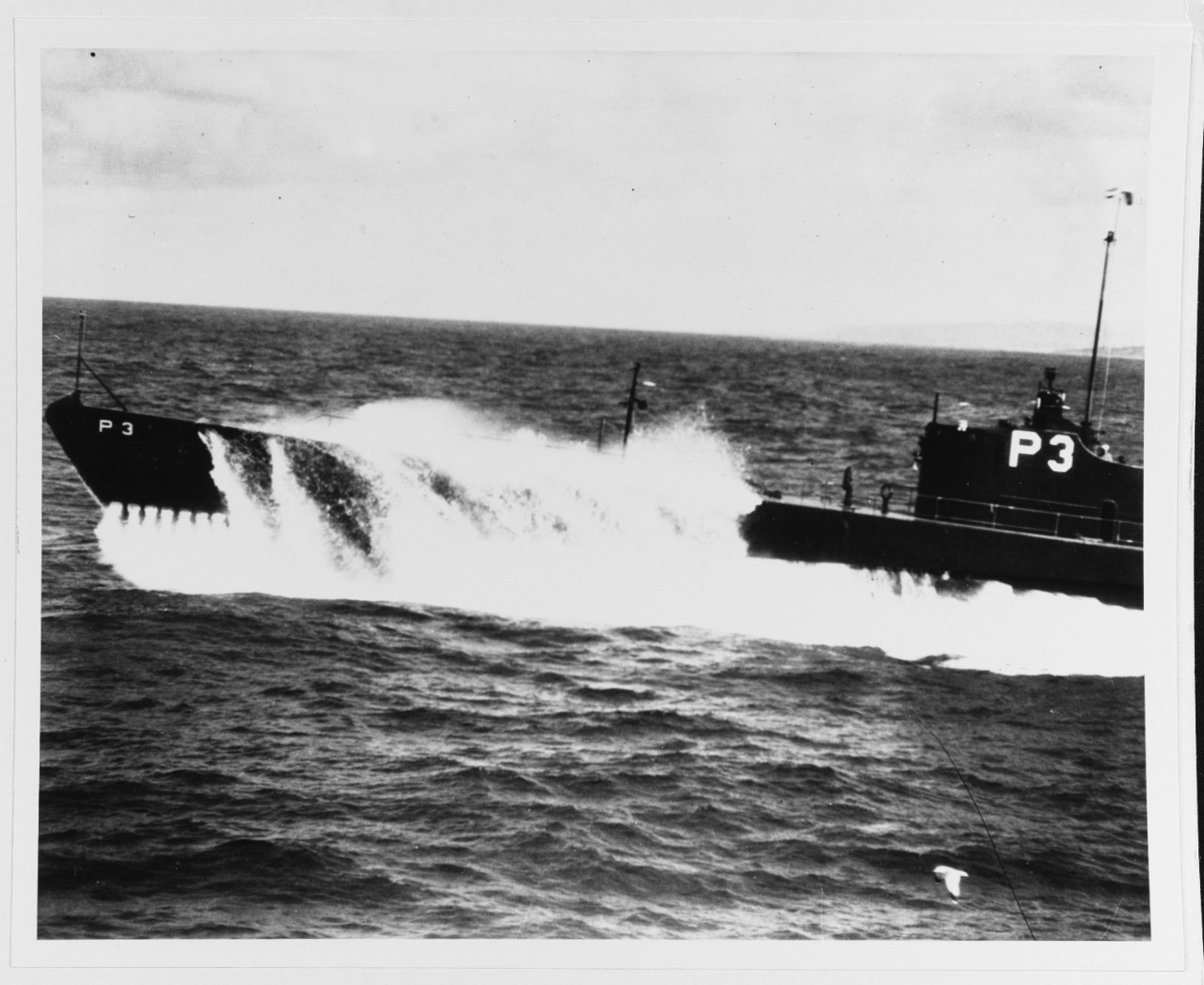
USS Shark vanished during a 1942 patrol in the Dutch East Indies. No distress call, no wreckage, only silence. This is the story of the submarine that went silent and never returned.
Lost 4 of 52
In the opening months of 1942, the United States Navy in Asia was outnumbered and outgunned. With surface fleets reeling and naval bases falling across the Pacific, submarines were pushed to the front lines of a rapidly expanding war. Small, silent, and deadly, they were tasked with disrupting Japan’s advance across Southeast Asia.
One of these boats was USS Shark (SS-174), a Porpoise-class fleet submarine designed during peacetime, but suddenly thrust into the flames of war. She carried the hopes of a shrinking Asiatic Fleet with her as she roamed treacherous waters from Manila to the Molucca Sea. What followed was a series of near-misses, quickly changing orders, and a final confrontation that would end her story.
This is the story of USS Shark, the submarine that went silent and never came home.
Plot Points


From Groton to Manila
Shark’s journey began at the Electric Boat Company shipyard in Groton, Connecticut. Laid down in October 1933, she was launched on May 21, 1935, and commissioned January 25, 1936, with Lieutenant Charles J. Carter in command.
At 298 feet long and displacing roughly 1,350 tons, Shark’s design marked a turning point in American undersea design, featuring improved diesel-electric engines, extended range, and a fully welded pressure hull, dramatically improving her endurance and diving ability. Armed with six torpedo tubes, four forward and two aft, 16 torpedoes, and a 4-inch deck gun, she could reach speeds up to 19.5 knots on the surface.
In the late 1930s, Shark was one of the Navy’s most advanced submarines, built to scout distant seas and strike without warning.
By late 1938, Shark transferred to Pearl Harbor, joining SubRon 4 for two years of operations in Hawaiian waters. Her complement, five officers and about 50 enlisted men, formed a tight-knit team.
In December 1940, with tensions in the Pacific rising, Shark received new orders: she was to steam west and reinforce the Asiatic Fleet in the Philippines. On December 3, she departed Pearl Harbor, arriving by month’s end in Manila, the hub of American submarine operations in the western Pacific.
Throughout 1941, Shark trained alongside older S-class submarines based at Cavite. By mid-year, Lieutenant Commander Louis Shane, Jr., a Naval Academy graduate and career officer, assumed command.
As clouds of war gathered over Asia, Shark’s crew went about their routines. Her sailors were far from home, and by late 1941, they could feel it in the tropical air: something was coming.


Shark Escapes from Manila
December 7, 1941: the attack on Pearl Harbor.
Within hours, word reached the Philippines that war had begun. The very next day, Japanese bombers struck US airfields across Luzon. The Asiatic Fleet’s submarine force, under Admiral Thomas C. Hart, braced for what was coming.
Shark was ordered to get underway immediately: her first mission was simply to survive. On December 9, she slipped out of Manila Bay, just ahead of a wave of enemy air raids. As the submarine cleared the breakwater, the crew’s mood was tense but focused. Their war had begun.
Her first patrol took her south of Luzon into Tayabas Bay, where Japanese invasion convoys were expected. For a week, Shark prowled the waters, but enemy contact eluded her.
On December 10, Manila was heavily bombed. By escaping the harbor, Shark narrowly escaped the fate of her sister ship, USS Sealion (SS-195), which was fatally damaged at Cavite.
Sealion would mark the first American submarine lost in the war.
Each night, Shark surfaced under the cover of darkness to recharge her batteries, her lookouts scanning the black horizon for silhouettes of enemy ships against the dark, star-laced skies. Her crew endured sweltering heat and silence, on their own in hostile seas. With US bases falling, there would be no help if things went wrong.
Just before Christmas, Shark received unexpected orders: return to Manila to pick up an important passenger.
By then, the situation in the Philippines was dire. American forces were retreating, and Admiral Hart, commander of the Asiatic Fleet, made the decision to evacuate himself south to safer waters. Shark was chosen to carry him.
The submarine rendezvoused at Manila on December 19. A few nights later, under the cloak of darkness, Admiral Thomas C. Hart and his staff came aboard. At 0200 on December 26, Shark departed Manila for the last time. With Hart and his team aboard, she set course through the Sulu Sea on a dangerous 1,700-mile run to Java. For a moment, she became the flagship of a fleet on the run, as Hart used the wireless to coordinate his embattled command.
Through tropical storms and high seas, Shark pushed forward. On New Year’s Day 1942, she arrived in the Dutch East Indies, safely delivering Admiral Hart to the naval base at Soerabaja, Java. It was a rare success in a season of defeats—the Asiatic Fleet’s commander had escaped, thanks to Shark.
After resupplying, Shark’s crew prepared to return to sea. The submarine now operated under the newly formed ABDA Command, a fragile coalition of American, British, Dutch, and Australian forces scrambling to defend the East Indies.
Japan was advancing on every front. And Shark would soon go out again for another war patrol that would tragically be her last.
Hunting and Hunted
On January 5, 1942, USS Shark (SS-174) departed Soerabaja on her second war patrol, with orders to patrol the Molucca Sea and nearby Dutch East Indies, where Japanese forces were advancing. The crew, hardened by a month of war, steeled themselves for what lay ahead.
They didn’t have to wait long.
The very next day, Shark had a brush with death. Lookouts spotted the wake of a torpedo homing in. An Imperial Japanese Navy submarine had fired first, but by luck and skill, the deadly “fish” missed, and Shark crash-dived to safety. Lieutenant Commander Louis Shane reported the near-miss back to base.
It was a jarring reminder: they were no longer just the hunters. They were prey.
Throughout January, Shark threaded through a labyrinth of islands, from Celebes to the Molucca Passage. These were dangerous waters. Japanese landings swept across the East Indies, and Allied submarines were often the only force contesting them.
Shark received a steady stream of shifting orders as Japanese plans unfolded. In mid-January, intelligence suggested an attack on Ambon Island, so she was instructed to coordinate with Dutch submarines defending the approaches and moved toward Ambon’s harbor, ready to strike.
By January 27, a major thrust through the Molucca Passage seemed imminent. Shark was ordered to join a small Allied pack screening sea lanes. Two days later, reports warned of Japanese ships approaching Ambon from another direction. And on January 29, she received new orders to shift east to the Lifamatola Passage.
Every day brought new intelligence and new danger. Shane and his crew had to adapt on the fly.
Then, Shark made contact.
On February 2, patrolling off Tifore Island, she sighted a Japanese ship and moved to attack. Tension rippled through the boat as a torpedo was loosed from her forward tubes. The crew waited for the telltale roar of impact.
But it never came.
The torpedo missed, either dodged by the ship or another casualty of the unreliable torpedoes plaguing American vessels in early 1942.
Japanese escorts struck back fast. Explosions rocked the sea as depth charges rained down. Inside Shark, lights flickered and steel creaked. The crew held on through ten… fifteen… twenty detonations. She went deep, then deeper still.
Eventually, the barrage ended, and Shark slipped away, shaken with only minor damage.
In her next transmission, she recounted the close call: depth charged 10 miles off Tifore after a failed torpedo run. Shark had taken her shot and missed, but survived to fight another day.
As February wore on, Allied frustration grew. Convoys were everywhere, and results were scarce.
On February 7, Shark radioed that she had sighted an unescorted cargo vessel, but the ship appeared empty of cargo or military value.
The enthusiastic report did not land well.
Captain John E. Wilkes, acting commander of Asiatic Fleet submarines, responded sharply and upbraided Shane. Reporting the chase of a lone empty freighter was not worth the risk of revealing the submarine’s position.
Chastened, Shark went quiet after the exchange. She would never be heard from again.
On February 8, new orders directed her to reposition to the Makassar Strait, transiting the north coast of Celebes. A major Japanese force was expected to pass through en route to Java. Shane presumably received the message and turned his boat south.
Shark’s patrol was due to end by February 24. Onboard, morale was likely a mix of weariness and resolve. They’d survived close calls, missed their chance, but they were still in the fight.
As the crew plotted course toward Makassar, they were unaware that one truth crept closer with each mile: fate was closing in.
Silence in the Deep
After February 8, 1942, USS Shark was never heard from again.
As days passed in silence, concern grew in Java. Still, in the chaos of war, no radio communication wasn’t uncommon. Shark might have been maintaining stealth or stalking a target.
In truth, the sea had already claimed her.
The exact circumstances of Shark’s final moments remain uncertain. Yet evidence pieced together from postwar Japanese records points to a deadly encounter in the pre-dawn hours of February 11.
That morning, the Japanese destroyer IJN Yamakaze was on patrol in the Molucca Sea, northeast of Celebes near Menado. At 01:37, her lookouts spotted an American submarine, surfaced in the dark.
Yamakaze closed in and opened fire, unleashing her 5-inch guns in a brutal surprise attack. Caught exposed, Shark had little chance to respond. Yamakaze reportedly fired 42 rounds, illuminating the sea with flame.
Within moments, Shark began to submerge—possibly trying to crash dive, possibly sinking. A shell may have breached her hull. Or perhaps a hit disabled her diving planes, sealing her fate.
As Shark slipped beneath the waves, Yamakaze’s crew reported hearing voices crying out from the water. Some of Shark’s sailors had either escaped the hull or been blown overboard. But the Japanese destroyer made no attempt to recover any survivors.
All 59 men aboard USS Shark were lost. A submarine once hailed as a symbol of innovation had become the prey, sunk by the very enemy she had been sent to shadow.
Back in Soerabaja, as February turned to March with no word from the boat, Navy officials began to face the inevitable. On March 7, 1942, USS Shark (SS-174) was declared overdue and presumed lost.
Shark was the first American submarine to be sunk in combat during World War II. Previous submarine losses had come by accident or air attack. Her fate marked a grim new chapter: the Pacific’s undersea war had begun.
In a twist of fate, the destroyer Yamakaze, believed to have sunk Shark, would meet her own fate soon after. On June 25, 1942, just months later, she was torpedoed and sunk with all hands by USS Nautilus (SS-168) south of Yokosuka, Japan.
Once again, the hunter had become the hunted, and the deadly rhythm of the Pacific war continued.
Eternal Patrol
No distress signal from USS Shark was ever received, and no wreckage was ever found. In the deadly silences of submarine service, some boats simply vanished, “lost at sea” in the truest sense.
She had gone silent, joining what submariners solemnly call “eternal patrol.”
At the time, the cause of her loss was unknown. No Allied witnesses had seen her final moments, and no messages came after February 8. Postwar analysis pointed to surface action with Yamakaze on February 11, but even that conclusion carries uncertainty, as Japanese records note several anti-submarine engagements in Shark’s patrol area.
Other possibilities were considered: a mine, a depth-charge attack from another patrol vessel, even mechanical failure. But the mine theory was dismissed, as Japan’s rapid advance left little time to seed those waters. And of all the Japanese claims, only Yamakaze’s encounter matched Shark’s known location and timing.
Historians concur: Shark was most likely lost to Yamakaze in the early hours of February 11.
In the spring of 1942, telegrams began arriving at homes across the United States. Families were told their sons, brothers, and husbands were “missing in action.”
For Marjorie Rowell Shane, wife of Lieutenant Commander Louis Shane, Jr., the news was devastating. She had married Louis on his graduation day from Annapolis in 1926 and stood by him through every assignment. Now, she faced the cruel silence of the unknown.
She never remarried.
For two decades, Marjorie believed that Louis survived and was alive on some distant island, still awaiting rescue. Without wreckage or witnesses, many families often clung to any glimmer of hope.
For the Navy, her disappearance was a grim addition to a growing toll. Within weeks of the outbreak of the war, multiple submarines were lost. Some, like S-26, to accident, and others, like Sealion, to air raids. Shark became the first American submarine officially listed as lost to direct enemy action and was awarded one battle star for her service.
Over the decades, Shark and her 59 crewmen have been remembered in many ways. Their names are inscribed on the Walls of the Missing at the Manila American Cemetery and in submarine memorials across the United States. As part of a national remembrance program, the United States Submarine Veterans of World War II assigned Shark to the state of Oklahoma, where a plaque stands in her honor.
She would not be the last submarine to bear the name. In 1944, USS Shark (SS-314) would be commissioned into action, only to be sunk during a later patrol, along with all hands aboard.
Almost a century later, the sea still holds her final secrets. Shark’s wreck has never been found. She lies somewhere in the deep—a protected war grave, forever sacred.
To this day, when submariners gather and the Tolling of the Boats ceremony is performed, her name is read aloud. A bell tolls. Heads bow.They remember the 59 men who sailed into danger, facing torpedoes, depth charges, and a final fight in the dark. They remember the silence that followed. They remember Shark.


Leave a Reply