

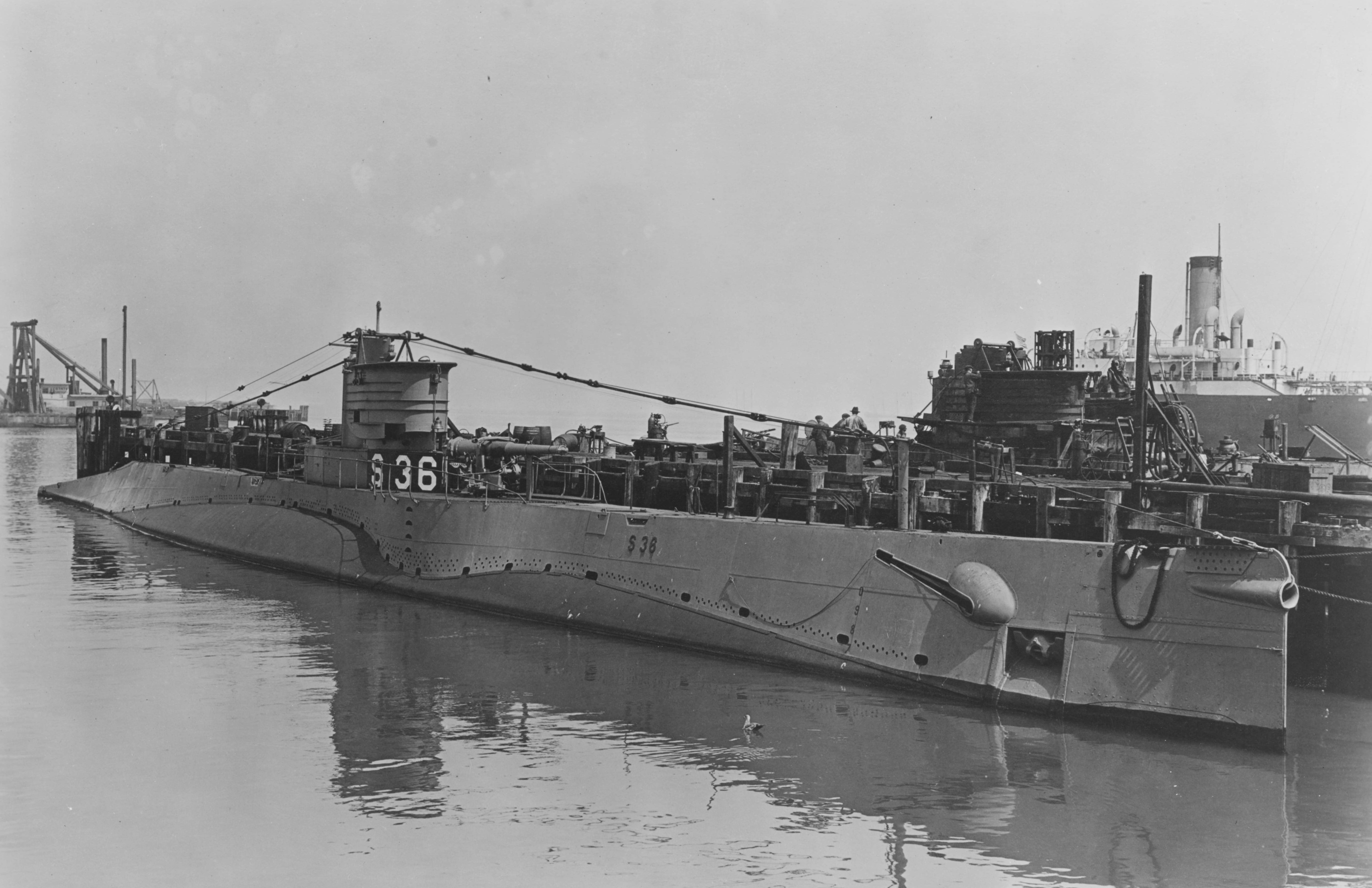
The story of USS S-36, the second US submarine lost in WWII. From perilous patrols to a daring escape, this forgotten chapter honors the Silent Service’s early sacrifice.
Lost 2 of 52
In the days following Pearl Harbor, war quickly engulfed the Pacific. The Japanese onslaught that began on December 7, 1941, December 8th across the International Date Line, did not stop at Hawaii. It swept into Southeast Asia and the Philippines almost immediately.
American forces in the Philippines, caught off guard by devastating air strikes, faced an invasion with much of their airpower and naval support knocked out. Submarines suddenly became some of the only US assets capable of striking back. Just three days into the war, on December 10th, USS Sealion was fatally bombed in port at Cavite, becoming the first American submarine lost in World War II. It was a sobering omen of the challenges ahead. Against this backdrop, another submarine, the aging USS S-36 (SS-141), was about to enter the fray and make history as the second US submarine lost in the conflict.
Plot Points
Find More Naval History Stories At The Reliable Narrator


USS S-36 was an S-class submarine launched in the early 1920s, one of the “Sugar boats” that patrolled Asian waters for years. Nearly two decades old at the outbreak of war, S-36 and her sister subs were limited in range, speed, and diving depth compared to newer fleet boats. Yet they had proven their reliability in peacetime Asiatic Fleet operations and produced many seasoned submariners.
Now, in the immediate aftermath of Pearl Harbor, these boats were thrust to the front lines of a desperate defense. S-36’s story — from her tense war patrols to a harrowing shipwreck and the crew’s fight for survival — exemplifies the courage of America’s submarine force in the opening months of the Pacific War.
This is the story of S-36, the submarine that fell second.
Chapter 1: After Pearl Harbor
When news of the Pearl Harbor attack reached the Philippines in the early hours of December 8, 1941, USS S-36 was already at sea. Just five days earlier, on December 3, her planned overhaul had been abruptly canceled. War loomed, and the old submarine was ordered back into action.Lieutenant John R. McKnight, Jr., S-36’s commanding officer, received secret orders to take up a defensive station off Cape Bolinao, on Luzon’s western coast, to guard against possible Japanese landings. The crew worked around the clock to get the aging boat seaworthy. That night, S-36 slipped out of Manila Bay under the cover of darkness. The departure was tense; war hadn’t been declared, but everyone knew it was coming.


For the next several days, S-36 lay in wait in a hidden cove near Lingayen Gulf, maintaining what officers described as a “ceaseless vigil.” In hindsight, it was her first war patrol, though none aboard knew just how close conflict was.
On December 8, across the International Date Line, Japan launched simultaneous attacks across the Pacific. S-36’s crew received confirmation that hostilities had officially begun. Enemy aircraft were spotted overhead from their patrol area. Two days later, on December 10, Japanese bombers struck Cavite Navy Yard, far to the south, crippling the base and sinking USS Sealion, the first US submarine lost in the war.
S-36, cut off from Cavite after its radio fell silent, remained on station, alone and uncertain of the wider situation. Her crew stayed ready, even as the boat’s systems began to falter. On December 12, the electrical steering gear failed. By the 13th, the exhaust valve leaks complicated dive operations. Attempts to contact headquarters were met with silence. Communications across the Philippines were breaking down.
Finally, on December 16, S-36 received orders to return for repairs. With her steering compromised, she navigated manually toward Mariveles, the last American naval foothold on Luzon.
She arrived four days later, on December 20, just as American and Filipino forces were retreating into the Bataan Peninsula. Her patrol had yielded no confirmed sinkings, only a list of growing malfunctions. But S-36 and her crew had survived the opening wave of the Pacific War.
Chapter 2: Patrols in the Philippines
In late December, the crew of S-36 worked feverishly to patch up their boat at Mariveles. The situation was grim: Japanese forces were advancing, and daily air raids kept everyone on edge. With only limited repairs possible in the field, she was ordered out again before the New Year.
On December 30, 1941, S-36 embarked on her second war patrol, determined to strike back at the enemy as US forces regrouped to the south. Once again, S-36 crept out of Manila Bay under the cover of night for what would become her final mission.
In the first days of January 1942, S-36 prowled the waters of the Verde Island Passage, between Luzon and Mindoro, hunting for Japanese ships. On January 1, she sighted a small enemy transport docked at Calapan, on Mindoro island, and seized the opportunity. The submarine closed in and fired a single torpedo. The crew reported a hit and believed they had sunk the 5,000-ton vessel. Japanese records did not confirm a sinking, but at the time, the submariners believed they had drawn blood.
After the attack, S-36 remained on patrol for another week, weaving through islets and channels while evading enemy patrol craft. But age and hard use were catching up with the boat. On January 8, her port air compressor broke down, complicating her ability to recharge air for diving.
Two days later, the starboard compressor began acting up. Still far from any safe harbor, S-36 pushed on, now aiming to leave Philippine waters and join the gathering Allied forces in the Dutch East Indies. The crew cannibalized parts and improvised fixes on the fly.
But on January 13, more trouble struck when one of the boat’s electric motors went out of commission. Engineers toiled to bring it back online, and by the next day, S-36 was limping along once more in the Sulu Sea, stubbornly continuing her patrol, despite a worsening condition.
Chapter 3: Flight to the Dutch East Indies
By mid-January, the Allies were consolidating their remaining naval forces in the Dutch East Indies under a joint American-British-Dutch-Australian Command. USS S-36 and a handful of other submarines were ordered to head south toward Java, both to reinforce the defense and to escape the tightening noose around the Philippines.
Lieutenant McKnight set course through the Makassar Strait, the deep channel between Borneo and Celebes, aiming for the Dutch naval base at Surabaya. It would be a long and perilous voyage for a damaged submarine.
On January 15, 1942, disaster nearly struck. S-36 experienced engine trouble on the surface at dawn, delaying her dive in dangerous waters. As the crew labored to fix the issue, a shape appeared on the horizon—a Japanese destroyer, closing fast.
Caught in the open, S-36 crash-dove. With one main motor still shaky and the other freshly sputtering, the submarine barely managed to submerge in time. But the destroyer was quick to pounce. Within moments, seven depth charges exploded around the sub. Lights shattered and went out. Fuses blew. Water leaked through straining seals.
The submarine’s hull rang with the thuds of near-misses as her crew was thrown into darkness and confusion.
The sub sank to 150 feet before regaining partial control. When she finally leveled off, the situation was dire: depth control was erratic, and one motor’s bearing was overheating to the point of smoking.
For the next two hours, S-36 played a deadly game of cat-and-mouse with the destroyer overhead. Her depth fluctuated wildly between 100 and 200 feet as the crew fought to prevent an uncontrolled descent.
At one point, S-36 began sinking past 230 feet, forcing the desperate measure of blowing ballast tanks to halt the dive. With the trim pump stalled and water sloshing in the bilges, McKnight ordered life jackets and escape lungs distributed, preparing the crew for the possibility of surfacing and fighting it out with their lone 4-inch gun.
It was a last-ditch scenario no submariner wanted to imagine.
Yet by skill and luck, the submarine survived. The crew managed to jury-rig cooling to the overheating motor and stabilize the boat’s buoyancy. After what must have felt like an eternity, the Japanese destroyer abandoned the hunt around 07:05 that morning. S-36 was battered, but alive.
Shaken but determined, S-36 crept onward down the Makassar Strait. The damage from the depth charges compounded her already fragile condition. One crewman had collapsed from heat and fumes, and the interior of the sub reeked of smoke, sweat, and diesel.
Still, the crew pressed on. On January 18, for the first time in ten days, they logged a day with no major system out of commission. The respite came as S-36 approached the southern end of the strait, navigating through foul weather and powerful currents.
Unbeknownst to the crew, an even greater ordeal lay just ahead.
Chapter 4: Grounding on Taka Bakang Reef
In the pre-dawn darkness of January 20, 1942, USS S-36 was feeling her way through the Makassar Strait, roughly sixty miles off the coast of Celebes. The night was moonless, the seas choppy, and visibility poor. Strong currents pushed and pulled at the submarine as she crept forward on a dangerous course.
Below deck, the navigator struggled with inaccurate Dutch charts, relying on dead-reckoning to estimate their position. Unbeknownst to him, a coral reef lay ahead in the darkness.
Just after 04:00, S-36 slammed hard onto Taka Bakang Reef. The boat shuddered to a violent halt as her hull grounded on the coral. In an instant, the valiant little submarine was fatally stranded.
The crew rushed to assess the damage. S-36 had run so far up onto the reef that, at low tide, she sat perched above the waves. Water began seeping into the forward compartments, and soon the battery well flooded—saltwater mixing with battery acid to produce deadly chlorine gas. Sailors coughed as the greenish-yellow fumes spread. They vented what they could and donned emergency breathing gear.
For the next 24 hours, the crew threw everything they had into saving their stricken ship. Ballast tanks were blown in repeated attempts to refloat her, then reflooded. Engines were reversed. Men shifted weight, rocked the boat, tried anything. But it was all in vain.
S-36 was wedged fast in the coral and would not budge. Every hour, the situation worsened: more flooding, more chlorine gas, and the constant fear that Japanese forces might discover their position.
At last, Lieutenant McKnight faced a heart-wrenching truth: S-36 was lost. But his crew could still be saved.
Chapter 5: Escape and Scuttling
Realizing that S-36 was doomed, a plain-language distress cal was sent out, an uncoded SOS, despite the risk of enemy interception. It was a cry for help that Lieutenant McKnight hoped friendly forces might hear in time.
They did.
Another US submarine, USS Sargo (SS-188), picked up the signal and relayed it up the chain of command. Allied headquarters in Java received word that S-36 was in dire straits. With no time to lose, help was dispatched.
A PBY Catalina flying boat was sent to locate the stranded sub and lend assistance if possible. When the PBY arrived overhead on January 21, the crew of S-36 waved from the reef. The pilot reported that McKnight and his men were still working to refloat the boat and were not yet ready to abandon her. The Catalina flew on to Makassar to coordinate rescue efforts with the Dutch.
Later that morning, a small Dutch Navy launch, Attla, arrived from Makassar City. By now, S-36’s bow was hopelessly flooded, and the submarine had begun to list. McKnight ordered the majority of his crew to evacuate for safety. One by one, 28 enlisted men and 2 junior officers transferred onto Attla, which had come alongside at the edge of the reef.
McKnight and a handful of key personnel stayed behind, making a final attempt to save their ship. They refused to leave just yet, hoping the next high tide, or the arrival of a larger vessel, might free the submarine.
That afternoon, the Dutch cargo ship SS Siberote arrived on the scene, but by that point, it was clear: S-36 would never ride the waves again. Reluctantly, McKnight gave the order to scuttle the boat to prevent her from falling into enemy hands.
The remaining crew set demolition charges and opened the submarine’s valves. At about 13:30 on January 21, 1942, USS S-36 slipped off the reef as seawater filled her compartments, and sank beneath the surf.
The last men of the crew transferred to Siberote, which would reunite them with their shipmates.
All 33 crew members had survived the ordeal.
Chapter 6: Aftermath
Thanks to swift Dutch assistance, every man from S-36 escaped the reef. Not a single life was lost in the grounding of USS S-36. That fact alone made the incident extraordinary, given the deadly stakes of war and the fate that would befall so many other submarines in the months and years to come.
The rescued crew was taken first to Makassar, then onward to the Allied naval base at Surabaya, arriving in Java on January 25, 1942. In those weeks, the war continued to worsen, and by late February, Japanese forces were closing in. After the disastrous Battle of the Java Sea on February 27, 1942, the remaining Allied naval units were forced to retreat. The submariners of S-36 barely had time to rest before being scattered to continue the fight.
Most of S-36’s crew went on to serve aboard other ships and submarines as the war raged on. Lieutenant McKnight was assigned to a newer fleet submarine, USS Porpoise (SS-172), which he would command later in 1942. Others likely crewed boats involved in the final defense of the Dutch East Indies, or joined new operations from Australian bases after the fall of Java.
Chapter 7: Legacy and Remembrance
USS S-36’s story, though less well-known than those of later wartime submarines, remains a powerful chapter in the history of the Silent Service. Officially credited with one war patrol and one enemy ship sunk, her combat record was brief, but meaningful.
She received one battle star for her service in World War II. Yet more important than awards was the example set by her crew. The courage and quick thinking they displayed in January 1942 became a testament to the value of training, discipline, and resolve. Their survival against the odds highlighted the perilous work of the Asiatic Fleet’s aging S-boats, which engaged the enemy despite being materially outmatched.
In the postwar years, as the US Navy and veteran groups sought to commemorate the sacrifices of submariners, S-36 was not forgotten. A black granite monument stands on the grounds of the Iowa State Capitol in Des Moines, honoring S-36 as part of a national effort to memorialize each of the 52 American submarines lost in the war.
The plaque notes that S-36 was “lost on her 2nd patrol, January 20, 1942 in Makassar Strait, Indonesia,” and is dedicated “in memory of all submarines and crews on eternal patrol.”
More than eighty years have passed since USS S-36 made her final stand. Today, little remains of the submarine itself—the coral and sea long ago reclaimed her wreck, and any remnants were likely salvaged or lost in the wartime chaos that followed.
But her story lives on.
It is a story of duty amid desperation, of a lone submarine battling breakdowns, depth charges, and unforgiving seas at the onset of the Pacific War. USS S-36 (SS-141) may have “fallen” as the second American submarine lost, but her crew’s escape without loss of life stands as a triumph of leadership, seamanship, and courage under pressure.


Leave a Reply