


George Vidal was born today in writing history, October 3. Celebrate the author’s birthday by learning more about his life and contributions to literature. Aspiring writers should also use this opportunity as a writing exercise. Look for inspiration today in writing history.
Today in Writing: October 3: Gore Vidal’s Birthday
Gore Vidal was born on October 3, 1925. He is best known for his novels, Myra Breckinridge and Burr. Vidal’s writing centered around sex, politics, and religion in American culture. The author was heavily interested in politics and unsuccessfully ran for federal office twice.
Aspiring writers should take note of Vidal’s writing style. He was unafraid to author novels and essays about topics considered taboo at the time. Political and private corruption was also a familiar and popular topic in his texts. Find inspiration in the stories, works, and words of this installment of Today in Writing: October 3.
Writing Prompts for Today In Writing: October 3
Please take this opportunity to learn more about Gore Vidal and his ability to underscore the problems he saw in society and culture. The author questioned his own sexuality throughout his life, giving him a unique perspective on many of the issues highlighted in his writing. Vidal is a beloved voice in literature.

What led Gore Vidal to be a writer? Where did the inspiration to tell his stories come from? And what helped the author create his unique writing style? Find inspiration about Vidal, learn more details about his life, and write!
Gore Vidal Biography
Eugene Louis Vidal was born in West Point, New York, on October 3, 1925. His father, Eugene Luther Vidal, was an army officer. At the time of his son’s birth, Eugene reportedly could not remember if his name was ‘Eugene Luther’ or ‘Eugene Louis.’ The mistake would be corrected at Gore Vidal’s baptism when he was 13. He was renamed Eugene Luther Gore Vidal. His mother, Nina S. Gore, provided the second surname.
Gore Vidal’s parents divorced when he was 10. Eugene, a college sports star, would play a pioneering role in commercial aviation. He was also a love interest of aviator Amelia Earhart. Nina, a socialite, would experience moderate success on Broadway. The subsequent remarriages of Gore’s parents gave him several half-siblings.
Vidal’s Early Life and Education
Vidal grew up in Washington, DC, where his grandfather, Thomas Pryor Gore, served as a Senator from Oklahoma. Legally blind, the young author read his grandfather’s documents to him and acted as his guide. Gore Vidal attended Sidwell Friends School before transferring to St. Albans preparatory school.
During a summer holiday in 1939, Gore Vidal made his first trip to Europe, visiting France and Italy. His stay in Rome left a lasting impact on the writer, and the city became central to his stories. However, Vidal was forced to cut his holiday short due to the onset of World War II in September. Upon his return to the United States, the author moved to a few other schools, where he wrote for their newspapers.

After the Japanese attack on Pearl Harbor, Gore Vidal enlisted in the United States Army at 17. He was stationed in Alaska as an office clerk but would become a warrant officer and First Mate. After three years of service, Vidal would be reassigned to a mess officer after developing arthritis. He would serve until 1946.
Gore Vidal’s Writing Career
Gore Vidal’s debut novel, Williwaw, was published in 1946. The story, set on a US ship in the Arctic waters of the Pacific Ocean during World War II, bears a striking resemblance to the author’s own life. He wrote his book when he was 19 and the first mate of a supply ship in Alaska. As an aspiring writer, Vidal used his personal experiences to create a narrative.
In 1948, Vidal caused an uproar with the publication of his novel, The City and the Pillar. It is a coming-of-age story wherein the protagonist discovers his homosexuality. At the time, being gay was considered immoral and unnatural. Critics were outraged and offended by the content of Vidal’s narrative.
According to the author, many influential reviewers forbid its critique to others. He also claims one editor told him: “You will never be forgiven for this book. Twenty years from now, you will still be attacked for it.” Vidal, however, thrived on the criticisms. He aimed to shock and was unafraid to do so.
The author continued to write but harbored the belief that his homosexuality kept him from receiving full literary recognition. Vidal Gore is known more as an essayist, a format he used to explore cultural, social, and political topics for over six decades. He was known for his passion and candor.
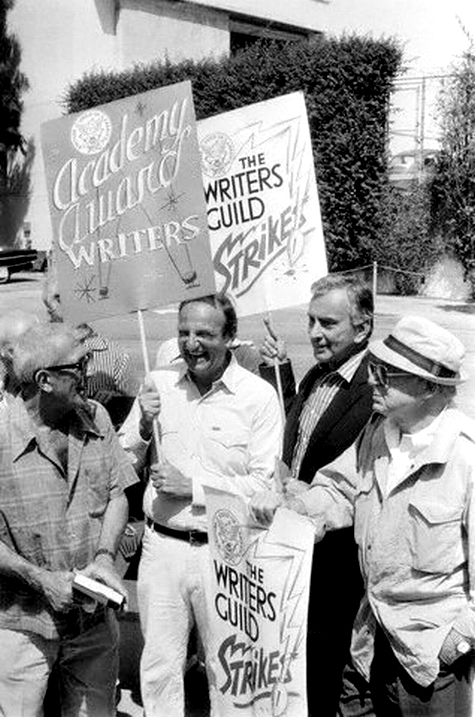
Vidal would also make significant contributions as a screenwriter. In 1956, Metro-Goldwyn-Mayer hired him to a four-year contract to write movies. In 1958, Gore worked as a script doctor on the epic Ben-Hur. He rewrote significant parts of the screenplay, which he could leverage for an early release from his contract.
Vidal in Politics
Gore Vidal identified with the progressive and social causes of the Democrat party. He believed that healthcare and education should be first-rate to compensate for the large amounts of money he felt the government took from his paychecks.
In 1960, he was the Democratic candidate for a Congressional seat in New York. Vidal lost the race for the Republican-held seat but received the closest margins ever recorded in the district. Despite his failure to reach office, political issues were often the subject of his writing.
The author also opposed foreign intervention, believing American Imperialism led to decadence. Imperial decay was a topic he pursued into his later life. Dreaming War: Blood for Oil and the Cheney-Bush Junta, published in 2002, made comparisons with President Roosevelt using the attacks on Pearl Harbor to enter WWII to President Bush using the September 11 attacks to intervene in the Middle East. George Vidal also believed Roosevelt had prior knowledge of the attacks before they happened.
Later Life and Death
Gore Vidal was known for his public feuds with celebrities like Norman Mailer and Truman Capote. In 1975, Vidal sued Capote for slander. The case was eventually settled in Vidal’s favor, but the two were venomous. Capote remarked: “I’m always sad about Gore—very sad that he has to breathe every day.”
In 2010, Vidal was diagnosed with Wernicke–Korsakoff syndrome, a neurological disorder that affects memory and eyesight. Gore Vidal died on July 31, 2012, from pneumonia at the age of 86. He is buried in Washington, DC, between the two most significant influences in his life: Henry Adams, a historian and writer Vidal admired, and his boyhood friend Jimmie Trimble who was killed in World War II.

David Shankbone, CC BY 3.0, via Wikimedia Commons
Gore Vidal’s Writing Style, Breaking Norms
Gore Vidal’s writing style exhibits a boldness in tackling issues and topics considered to be taboo. He is a forefather of the sexual liberation movement that would grow throughout his lifetime. Despite the vehement reaction to The City and the Pillar, Vidal’s voice was undeterred. He maintained his ideals, remained unafraid, and retained the status of a significant voice in literature.
Notable Gore Vidal Books
Williwaw (1946)
The City and the Pillar (1948)
The Best Man (1960)
Julian (1964)
Myra Breckinridge (1968)
Burr (1973)
Lincoln (1984)
Today in Writing: October 3 – 10 Gore Vidal Quotes
Gore Vidal sought to write about the issues he perceived in society. Those topics often pushed the public to view his works as immoral and lewd. However, the author persisted and continued to poke at these problems, keeping them in the national conversation. Aspiring writers can find inspiration in his courageous writing.
10 Gore Vidal Quotes
1. Style is knowing who you are, what you want to say, and not giving a damn.
2. The greatest pleasure when I started making money was not buying cars or yachts but finding myself able to have as many freshly typed drafts as possible.
3. There is no human problem which could not be solved if people would simply do as I advise.
4. While campaigning, I got to know many high-school teachers, and let me say that the good ones are the unsung heroes of our society, and the bad ones are the gravediggers.
5. Any American who is prepared to run for president should automatically, by definition, be disqualified from ever doing so.
6. Half of the American people have never read a newspaper. Half never voted for President. One hopes it is the same half.
7. A narcissist is someone better looking than you are.
8. The four most beautiful words in our common language: I told you so.
9. I’m not a conspiracy theorist – I’m a conspiracy analyst.
10. It is not enough to succeed. Others must fail.
Today in Writing: October 3 – Daily Writing Exercise
Now that you have done some reading, it is time to write. Aspiring writers should look to the stories from Today in Writing: October 3 and Gore Vidal’s life for their own inspiration. Check through his quotes to spark an idea, or read his works to get a sense of his writing style.
Find a topic from and freewrite for 10 minutes. The writing of Gore Vidal contains strength and courage. In Vidal’s words, “Style is knowing who you are, what you want to say, and not giving a damn.” Aspiring writers should look for inspiration in the author’s non-caring attitude and start writing.
Don’t let any opportunity to write go to waste. Aspiring writers: Practice your writing today. Celebrate Today in Writing History October 3.


Leave a Reply