

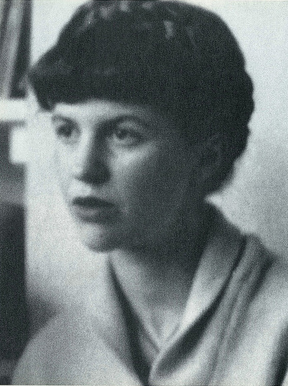
Sylvia Plath was born today in writing history, October 27. Celebrate the writer’s birthday by learning more about her life and contributions to literature. Aspiring writers should also use this opportunity as a writing exercise. Look for inspiration today in writing history.
Today in Writing: October 27 – Sylvia Plath’s Birthday
Sylvia Plath was born on October 27, 1932, and is best known for her works The Bell Jar and Ariel. Plath’s contributions to the literary world were tragically cut short- the poet took her own life at 30 after a lifetime struggle with depression. Despite her brief endowment, her writing legacy stands as pillars in the confessional writing genre. Find your inspiration in the stories, works, and words in this installment of Today in Writing: October 27.

Writing Prompts for Today In Writing: October 27
Please take this opportunity to learn more about Sylvia Plath and her contributions to confessional writing. The author’s poetry offers a glimpse into her troubled mind, and her novel draws on inspiration from her own struggles. Plath’s writing sings with an air of autobiography, which can be haunting, considering her untimely end.
What led Sylvia Plath to write? Where did the inspiration for her ideas come from? And what helped the poet create her writing style? Find inspiration about Plath, learn more details about her life, and write!
Sylvia Plath Biography
Sylvia Plath was born in Boston, Massachusetts, on October 27, 1932. Her father, Otto Plath, born in Germany, was an entomologist and biology professor. Her mother, Aurelia Schober Plath, was the second generation American of Austrian heritage. Otto Plath passed away on November 5, 1940, following the amputation of his foot due to untreated diabetes. Plath had turned eight a few days prior.
From a young age, Sylvia Plath showed remarkable literary abilities. At eight, she had her first poem published in the Boston Herald. Over the next few years, the young poet would continue to submit poetry to local publications. By eleven, the author was keeping a journal. In addition to her literary talents, Plath also showed aptitude as a painter. Her IQ was 160.
Plath’s College Education and Depression
Sylvia Plath attended Smith College in 1950. She continued to excel academically and took her literary talents to new heights. Plath was the editor of the college’s publication, The Smith Review. In her junior year of college, she was awarded a guest editor position at Mademoiselle magazine. However, the experience proved to be a monumental letdown for Plath, and the experience would become a heavy inspiration for her future novel, The Bell Jar.
The lackluster experience also began a decline in Plath’s mental health. She started having suicidal thoughts and cut her legs to see if she had the “courage” to kill herself. To complicate her state of mind, Plath was also denied admittance to Harvard’s writing seminar. After undergoing electroshock therapy for depression, Sylvia Plath attempted suicide on August 24, 1953, by overdosing on her mother’s sleeping pills and crawling under her front porch.
Plath survived the suicide attempt and was committed to psychiatric care. However, practices concerning mental illness in the 1950s were far less advanced than they are now. Sylvia Plath underwent six months of electro and insulin shock therapy at McClean Hospital.
Plath would seemingly recover and return to Smith College, where she would graduate summa cum laude. She would continue her studies at Newnham College, a women-only campus of Cambridge University in England. Sylvia Plath continued writing and publishing her work in Newnham’s school publications.
Sylvia Plath’s Writing Career
Plath met her future husband, fellow poet Ted Hughes, in February 1956. The two quickly fell in love and wrote each other poems. On June 16, 1956, the couple wed in London. Plath would complete another year at Newnham, and the couple moved to the United States in 1957.
Back in the United States, Sylvia Plath took up a teaching position at her alma mater, Smith College. However, she found it difficult to both teach and write, and left her role in 1958. While working as a receptionist in Boston, Plath attended creative writing seminars in the evening given by poet Robert Lowell. Writers Anne Sexton and George Starbuck were also in attendance at these classes.
Lowell and Sexton both encouraged Plath to write from her experiences. This confessional style of writing would explore her depression and attempted suicide. The deep and personal subject matter plumbed the private depths of the writer’s life. Plath resumed psychoanalytic treatment in December 1958.
Ted and Sylvia returned to England in December 1959. On April 1, 1960, the couple welcomed their first child, a daughter, Frieda. In October of that year, Plath also published her first collection of poetry, The Colossus.
Plath’s Depression Returns
Sylvia Plath’s struggle with depression took a turn in 1961. In February, her second pregnancy ended in a miscarriage. It was an event that would be used for inspiration in several of her poems. In a letter to her therapist, Plath accused Hughes of beating her two days prior. The author also finished work on her semi-autobiographical novel, The Bell Jar, which drew from her prior suicide attempt and experiences in college.
The following year was just as hard for Plath. The couple welcomed their second child, Nicholas, in January. In June, Sylvia was involved in a car accident, which she would describe as one of many suicide attempts. In July, Sylvia Plath discovered that Hughes had been having an affair with Assia Wevill. The couple separated in September.
Following the separation, Plath experienced a burst of inspiration and began writing a collection of poetry, which would be published posthumously as Ariel. At least 26 of the poems in this collection were written in the final months of Plath’s life. Sylvia Plath and her two children, aged two years and nine months, moved to London in December 1962.
That winter was the coldest winter recorded in 100 years. Pipes froze, and her children were constantly sick. The flat also did not have a telephone. Plath would complete her collection of poetry as depression took hold. The Bell Jar, Plath’s only novel, was published in January 1963 to indifference.
Plath’s Suicide
In January 1963, Plath told her doctor about a depressive episode she had been experiencing for the last several months. While she could still write, the episode was marked with feelings of helplessness and suicidal thoughts. She had insomnia and took a sleeping medication but could not sleep for long periods. Despite losing 20 pounds, Sylvia Plath maintained her appearance and did not speak openly of her thoughts and feelings.
Her doctor, John Horder, was also a close friend. He prescribed Plath with an anti-depressant and visited daily. Hoarder also tried to admit his friend to a hospital but was unsuccessful and arranged to have a live-in nurse monitor her condition and help care for the children. The nurse was due to start living with Plath on February 11, 1963.
On the morning of February 11, 1963, the nurse arrived, unable to enter Plath’s apartment. With the help of a workman, the two forced themselves inside and found Plath dead with her head in the oven. The rooms between her and her sleeping children, unharmed, had been sealed by tape, clothes, and towels. It was determined that Sylvia Plath died on February 11, 1963, from carbon monoxide poisoning. She was 30 years old.
Her final collection of poetry, Ariel, was published in 1965 by her husband, Ted Hughes. It is a volume of deeply personal and confessional poetry, most of the poems written during the severe depressive episode that would ultimately take Plath’s life. The publication of Ariel would shine a light on Sylvia Plath’s body of work, finally earning her the literary praise she deserved.
From Ariel, A Poem By Sylvia Plath
And I
Am the arrow,
The dew that flies
Suicidal, at one with the drive
Into the red
Eye, the cauldron of morning.
10 Sylvia Plath Quotes
1. If you expect nothing from somebody you are never disappointed.
2. The silence depressed me. It wasn’t the silence of silence. It was my own silence.
3. I felt my lungs inflate with the onrush of scenery—air, mountains, trees, people. I thought, ‘This is what it is to be happy.’
4. I shut my eyes and all the world drops dead; I lift my eyes and all is born again.
5. I desire the things that will destroy me in the end.
6. Is there no way out of the mind?
7. I talk to God but the sky is empty.
8. Kiss me, and you will see how important I am.
9. We should meet in another life, we should meet in air, me and you.
10. There is nothing like puking with somebody to make you into old friends.
Notable Sylvia Plath Writing
The Colossus and Other Poems (1960)
The Bell Jar (1963)
Ariel (1965)
Today in Writing: October 27 – Daily Writing Exercise
Now that you have done some reading, it is time to write. Aspiring writers should look to the stories from Today in Writing: October 27 and Sylvia Plath’s life. Read her quotes and study her poetry to understand the author’s writing style.
Find a topic and freewrite for 10 minutes. Sylvia Plath was a blinding literary talent that was tragically cut short after losing to her personal demons. Honor the poet’s memory by studying her crackling prose and confessional style. Aspiring writers should pay homage to Plath and start writing.
Don’t let any opportunity to write go to waste. Aspiring writers: Practice your writing today. Celebrate Today in Writing History October 27.


Leave a Reply