

Operation Caesar: Desperation, code-breaking, and a battle beneath the waves.
An Unexpected Arrival
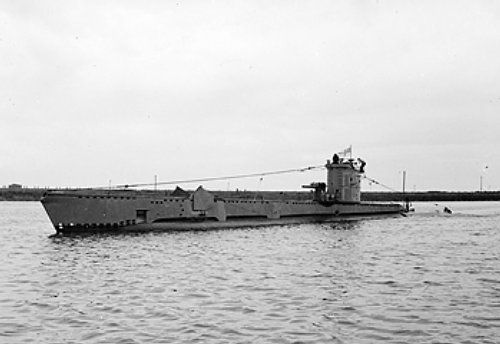
In the final days of World War II, Germany launched several desperate missions to turn the tide of war. One of these missions was Operation Caesar (“Unternehmen Kaiser”). This top-secret mission aimed to deliver advanced military technology to Japan. However, the plan failed when the German submarine U-864 was sunk by the British submarine HMS Venturer.
This was the only time in history a submarine sank another while both were underwater. The effects of this mission continued long after the war, especially because of what the submarine was carrying.
The Mission: Supplying Japan with Advanced Technology
On December 5, 1944, U-864 began her first mission. Her goal was to deliver important supplies to Japan. The cargo included parts for Messerschmitt jet engines for Japanese planes and guidance systems for V-2 missiles. The submarine also carried 1,857 containers of mercury, weighing 65 tons. The mercury was meant for making weapons.
The submarine left Kiel, Germany, but immediately ran into trouble. She hit the bottom of the Kiel Canal and damaged her hull. Captain Ralf-Reimar Wolfram decided to go to the U-boat base in Bergen, Norway, for repairs. In January 1945, British bombers attacked Bergen, which caused Operation Caesar major delays. Repairs were completed in February, and U-864 set out again.
Meanwhile, British codebreakers at Bletchley Park had cracked the German Enigma code and about Operation Caesar and U-864’s mission. The British Navy sent the submarine HMS Venturer, led by Lieutenant James Launders, to find and stop U-864 near Fedje Island, Norway.
The Battle on February 9, 1945
On February 6, 1945, U-864 had engine problems that made loud noises. Worried about being found, Captain Wolfram decided to return to Bergen, planning to meet an escort ship at Hellisøy on February 10.
At the same time, HMS Venturer was searching. On February 9, the crew of Venturer heard an engine through their hydrophone. Lieutenant Launders raised the periscope and saw what looked like another periscope—most likely U-864’s snorkel.
Venturer started following U-864. The German crew, realizing they were being followed, took evasive action and began moving in a zigzag pattern. After three hours, Launders carefully planned his attack. He fired four torpedoes 17.4 seconds apart.
U-864 avoided the first three torpedoes, but the fourth hit the submarine, breaking her in half. The submarine sank, and all 73 crew members, including Captain Wolfram, were killed. Operation Caesar had failed.
This was the only time in history that a submerged submarine sank another submerged submarine.
Aftermath and Consequences
The failure of Operation Caesar was a major loss for Germany. Damage to the submarine and bombing raids delayed the mission. Without these delays, U-864 might have escaped before the British learned about her mission.
Lieutenant James Launders was honored with the Distinguished Service Order for his successful command. The British did not suffer any damage or loss of life in the battle.


Finding the Wreck and Environmental Dangers
Years later, Operation Caesar became important again for a different reason. In the early 2000s, the Royal Norwegian Navy found documents showing that U-864 had carried mercury. This was a serious problem because mercury is poisonous. The Navy began searching for the wreck.
After five years, they found the wreck in October 2003, about 4 kilometers (2.5 miles) off Fedje Island. The mercury containers had started leaking, poisoning the seabed. Each year, more mercury leaked, threatening the local ecosystem.
What to Do: Raise or Contain the Wreck?
Norwegian officials faced a tough choice: Should they raise the wreck or seal it where it lay? Lifting the wreck was dangerous because it still held unexploded torpedoes. One idea was to cover it with sand, gravel, and concrete to stop the mercury from leaking.
After many studies, the Norwegian government decided to seal the wreck. In February 2017, they covered it with 50 centimeters of sand and 160,000 tons of rock. This plan aimed to keep the mercury contained and prevent more pollution.
Fishing near the wreck is still banned to protect people from mercury poisoning.
Final Thoughts
Operation Caesar is a story of desperation and historic accomplishment. The mission’s failure highlights how important code-breaking was during World War II. Today, the wreck of U-864 rests beneath rock and sand, a reminder that the effects of war can last for decades.


Leave a Reply