

In the depths of the Pacific, far from headlines and glory, American submarines waged a silent war against Japan. Making up just 2% of the United States Navy during World War II, they sank over half of Japan’s merchant fleet and a third of her warships by war’s end.
These boats were both hunter and hunted—slipping behind enemy lines, surfacing to attack, then diving beneath the waves to escape. For the men aboard, every patrol was a gamble with death.
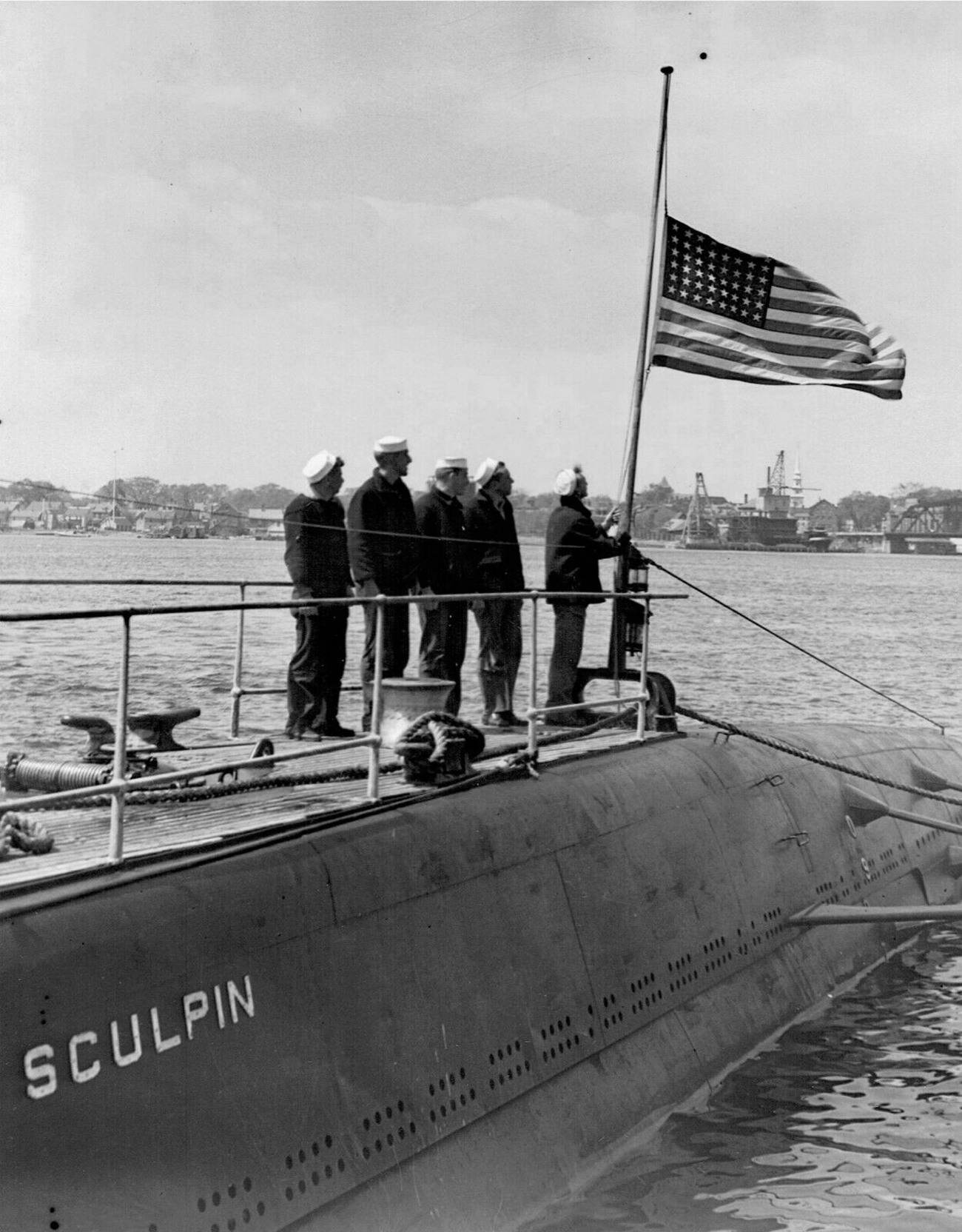
USS Sculpin was one of those ships. This is her story.
Plot Points


Part 1: Into the Deep
Commissioned in 1939, Sculpin was a Sargo-class submarine that had seen action since the earliest days of the war. By November 1943, she had completed eight war patrols—sinking freighters, dodging depth charges, and surviving close calls with the enemy. But nothing could prepare her crew for the ordeal of her ninth–and final–patrol.
Departing Pearl Harbor on November 5, 1943, with eighty-two men aboard, Sculpin was under the command of Lieutenant Commander Fred Connaway. Alongside him was Captain John P. Cromwell, a veteran submariner carrying vital intelligence.
He had been briefed on ULTRA, the Allies’ sensitive codebreaking program, and knew critical details about the upcoming invasion of Tarawa. Captain Cromwell was aboard to coordinate a small wolfpack of American submarines tasked with intercepting Japanese forces near Truk and, if possible, blunt any naval response to the landings.
Sculpin took up station north of Truk, and for days, she prowled the waters in silence. Then, on the night of November 18, the submarine made radar contact on a fast-moving convoy. Connaway quickly ordered an end-around, sprinting to get ahead of the target before dawn.
By morning, the trap was in place. Sculpin submerged along the convoy’s expected path and waited. Through the periscope, Connaway had the enemy in his sights. But just as he prepared to fire, the convoy unexpectedly zigged. Whether they spotted the periscope or picked up something on sonar, the moment was lost. Japanese destroyers surged forward, and Sculpin dove to evade.
No depth charges followed, and for a while, it seemed Sculpin had slipped the noose. Connaway wasn’t ready to let the target go, and about an hour later, he brought the submarine back to the surface, hoping to reacquire the trail.
Instead, they surfaced into the crosshairs.


Just 6,000 yards away, a lone destroyer loomed. The Japanese had left behind Yamagumo to catch any lurking American submarines. They were ready—and waiting.
Connaway crash-dove, but Yamagumo pounced. On the first run, she dropped eighteen 600-pound depth charges directly over Sculpin’s position. The force of the blasts rocked the submarine.
“It jarred holy hell out of us,” one crewman recalled.
Damage came fast. The aft engine room suffered a cracked exhaust valve. Depth and pressure gauges across the diving station flooded or jammed. Light bulbs shattered. And seawater gushed into the forward starboard side at the engine coolers, spraying out between flanges.
Then came the second wave.
The next string of explosions knocked out the lights entirely, worsened the leaks, and pushed internal temperatures past the breaking point. The air grew hot and heavy with carbon dioxide. Still, the Japanese destroyer circled above, her propellers audible from below.
Then—relief. Sonar picked up a rain squall, and Connaway ordered the boat into the storm, hoping the noise would mask their escape. Sculpin ran silent for twenty-five minutes, and the enemy propellers faded.
Inside the sub, however, conditions were quickly deteriorating.
Flooding in the aft engine room upset the boat’s trim. Connaway ordered water transferred forward to level her out, but the pumps failed. He relieved Lieutenant George Brown from the diving station to conduct an inspection.
Brown reported back: the flooding was worse than expected, so a bucket brigade was formed. Exhausted sailors, stripped to their undershirts, formed a line in 100-plus degree heat and passed water forward through the ship by hand.
Then came another blow.
With gauges stuck and pressure indicators flooded, the temporary diving officer accidentally broached the surface while trying to reach periscope depth. No one could be blamed—the depth gauge was frozen at 170 feet. But when Sculpin’s conning tower broke the surface, Yamagumo immediately spotted her and rushed in to renew her attack.
Sculpin dove again, just as another string of depth charges detonated overhead.
This time, the blasts tore the radio transmitter and receiver from the bulkhead and knocked her sonar loose. Worse yet, the submarine lost depth control and plunged—past her test depth, then deeper—300, 400, over 500 feet before finally leveling out.
Her hull groaned under the pressure.
Sculpin was in dire straits. Blind, deaf, leaking, and nearly crippled, her steering gear was so badly damaged it could barely be operated. Worse still, her battery was nearly exhausted, and there were still six hours until nightfall.
Commander Connaway remained calm throughout it all.
“Connaway had been so calm, so resourceful during those five hours of depth charging,” one sailor recalled, “that it was hard to realize how serious the situation was.”
But it was serious. And Connaway knew it.
He explained the situation to Captain Cromwell: Sculpin couldn’t survive another wave of depth charges. If they stayed under, the crew would die. But if they surfaced, they would at least have a chance to fight. Connaway was determined to give them that chance.
Before heading to the bridge, he gave a final instruction to Lieutenant Brown:
“Make sure Sculpin is scuttled in case we lose this one-sided engagement.”
Then, cool and steady, he climbed the conning tower.


Part 2: A Fight to the Death
At noon on November 19, 1943, after nearly six hours of relentless depth charge attacks, USS Sculpin surfaced for the last time.
An order rang out: “Stand by to battle surface!” With the deck still awash, men scrambled topside to their battle stations. Fireman First Class Joseph Baker remembered the moment clearly:
“At first we couldn’t see the destroyer. Then someone spotted it—starboard side, low against the sun. About 3,000 yards out.”
Sculpin opened fire, her lone 3-inch deck gun thundering. “We got off the first shot,” Baker said. “It went over him. The second fell short.”
Then the enemy answered. The Japanese destroyer’s heavier 5-inch guns tore into Sculpin. One shell ripped through the conning tower, killing Lieutenant Commander Fred Connaway and the rest of the bridge crew.
Machine-gun fire raked the decks, cutting down sailors as they fought to return fire. Lieutenant Joseph Defrees was killed manning the 3-inch gun. Fireman First Class Allen Guillot, chest torn open by shrapnel, kept feeding ammunition forward until he collapsed and fell overboard. Torpedoman Third Class John Harper held his position at the 20 millimeter gun to the bitter end.
Though the men of Sculpin fought with courage, their odds were hopeless.
With her captain and senior officers dead, command fell to Lieutenant George Brown, still stationed in the control room. Shaken but clear-headed, Brown grasped the severity of their situation. The destroyer had Sculpin’s range. One more shell could destroy the hydraulics—and leave them unable to scuttle the boat.
Brown was determined to deny the enemy their prize.
In the control room, he found Captain John Cromwell calm and composed. Brown explained the situation: the ship was lost. Cromwell agreed—but refused to leave.
“He told me to go ahead,” Brown later recalled. “He said he could not go with us because he was afraid the information he possessed might be injurious to his shipmates at sea if the Japanese made him reveal it by torture.”
Cromwell would go down with the ship, taking the secrets of ULTRA and the invasion of Tarawa with him. For his sacrifice, he would posthumously receive the Medal of Honor.
Brown didn’t argue. He rang up emergency speed and gave the order: abandon ship.
Chief Motor Machinist’s Mates Richard Hemphill and William Haverland passed the word fore and aft. Men began leaping into the sea—but not all. In the wardroom, Hemphill found Ensign Max Fiedler calmly playing cards with Engineman Emil Apostol.
“We do not choose to go with you,” Fiedler said. “We prefer death to capture by the Japanese.”
Hemphill had no time to argue. He turned and left.
Others refused to believe Sculpin was lost. Many were last seen still at their stations, faithfully manning their posts to the end.
Brown waited one minute, then gave the final command: “Open the vents.” The ballast tanks flooded. Sculpin began her final dive.
In the water, survivors turned back to watch. Motor Machinist’s Mate George Rocek had just reached the deck when a shell struck nearby. Stunned and bleeding, he jumped.
“Once in the water,” he wrote, “I watched Sculpin submerge in a normal manner.”
But there was nothing normal about it.
Inside the submarine, Petty Officer Pete Gabrunas remained at the hydraulic manifold. When the scuttling order came, he stayed at his post, even as wreckage blocked his escape. Gabrunas and at least a dozen men rode Sculpin on her final descent.
The submarine disappeared in a whirlpool of white foam.
Rocek later recalled feeling underwater explosions—likely the batteries detonating as the sub was crushed beneath the sea.
The battle was over.
But for the survivors floating in the oil-slicked water, the nightmare had only just begun.
Part 3: Truk
The oil-soaked survivors of USS Sculpin were hauled aboard the Japanese destroyer Yamagumo, bleeding, bruised, and in shock.
Signalman William Welsh was deemed too wounded to be saved and was thrown back into the sea by Japanese sailors. Another survivor, dazed and bloodied, was nearly cast overboard as well, but broke free and scrambled back to his shipmates.
That night, the forty-one remaining Americans were bound and left on the destroyer’s open deck. A rainstorm rolled in, pelting the men with freezing water as the seas tossed beneath them. They were given no food, no water, no blankets—only a sheet of tarpaulin stretched over them. Some lay in agony, slowly bleeding in the dark.
When the ship reached Truk, the prisoners were blindfolded and dragged ashore. Those who tried to peek beneath their coverings were clubbed in the head. The men were crammed into three filthy cells, each barely eight by seven feet, with a single latrine hole in the corner.
They would remain there for the next twelve days.
“A living hell,” one described.
The beatings started immediately. Japanese interrogators demanded details about Sculpin’s mission, American submarine tactics, and naval plans. The men were struck with fists, clubs, or rifle butts—especially Lieutenant George Brown, now the senior officer, and anyone suspected of technical expertise, like the radar operators.
But no one broke.
The crew stuck to their fabricated story: Sculpin had been on her first patrol. They knew nothing.
Torpedoman H.J. Thomas employed deception to deflect suspicion. He invented a secret American refueling base between Truk and the Gilberts. His captors produced maps, some dating back to the 19th century, but could find no such island. Other prisoners solemnly repeated the same lie.
The interrogations were always done blindfolded. Any hesitation was met with a strike from a heavy wooden bat. Some, like Rocek, learned to delay by pretending not to understand the questions. The Japanese interpreter, not fluent in English, often gave them just enough room to maneuver.
The conditions were beyond squalid. Each prisoner received one rice ball per day and a few ounces of water. There was so little space that men took turns standing to let the wounded lie down.
Brown repeatedly begged for medical help, but was refused.
After nearly a week, when the wounds began to fester and stink, three men were finally taken to a Japanese hospital. They returned days later, one missing a hand, another an arm. The amputations, the men said, had been done without anesthetic, while being interrogated.
On the tenth day, the prisoners’ heads were shaved, and they were issued Japanese Navy undress blues. Around each man’s neck hung a wooden block inscribed with kanji.
Then came the separation.
Blindfolded and loaded into trucks, the Americans were driven to the coast and divided into two groups. Lieutenant Brown and nineteen others were loaded onto a ship bound for Japan. The remaining twenty-one, including Motor Machinist’s Mate George Rocek, were herded aboard the escort carrier Chūyō.
Below decks, they were crammed into a locked, sweltering compartment. The air was foul. The heat, stifling. Food was sparse, water nearly nonexistent. The prisoners were barely surviving.
And Chūyō would never reach her destination.

Part 4: The Death of Chūyō
Just before midnight on December 31, 1943, Chūyō was rocked by a violent explosion. Below deck, the 21 Sculpin prisoners were hurled into the air, slamming into bulkheads. Submariners themselves, they recognized the sound immediately.
It was a torpedo.
Cheers erupted in the hellish hold. The American submarine Sailfish, a boat Sculpin had helped rescue four years earlier, had unknowingly returned the favor. The survivors knew this was likely their end, but for a moment, they felt pride.
Then came the smoke.
The carrier lost power. Alarms wailed. Through the deck below, the captives heard the frantic thumping of timber as Japanese damage control teams tried to shore up bulkheads. But their efforts were quickly overwhelmed as water flooded the compartments below and began to rise into theirs.
The hatch was locked from the outside. They pounded. Shouted. Nothing.
Thinking fast, some sailors ripped a metal pump handle from the head and wedged it into the doorframe. Together they pried, heaving until, on the second attempt, the hatch gave way. One by one, they pushed through the smoke-choked corridors, holding hands to stay together. Japanese sailors ignored them completely, racing in the opposite direction.
Topside, the sky was black and thick with smoke. In the chaos, the prisoners looted the galley, grabbing whatever they could, their first real sustenance in weeks.
Life jackets were scarce. Though one compartment held more, the Japanese didn’t hand them out. Instead, they lashed together poles and timber for makeshift rafts. Only about a third of the crew had flotation gear. In the rising panic, they even passed out canned goods and beer.
Then, a second torpedo hit.
The blast was devastating. Chūyō groaned and rolled hard to port. The carrier was dying.
Prisoners and Japanese sailors alike rushed to the starboard side, the line between enemy and comrade blurred. Officers in full gear, swords tucked between life jackets, shoved toward the edge. Rocek and Chief Signalman Dinty Moore clung to a collapsible searchlight about 30 feet from the sea.
The deck was steep now. The ocean surged below.
“Let’s go!” Rocek remembers shouting.
They slid down the slanted deck and into the sea.
The suction pulled Rocek under instantly. He thrashed, lungs burning. As the carrier slipped beneath the waves, an air pocket lifted him closer to the surface. With one final kick, he broke through. Nearby, a small raft bobbed. He swam to it and hauled himself aboard. Two other Sculpin men were already there—a mess attendant and an officer.
Dinty Moore was gone.
A Japanese destroyer circled the wreckage for five hours, hesitant to stop with an American sub still nearby. At last, it came in to collect survivors. A ladder was thrown down, along with a few trailing ropes.
Rocek grabbed the ladder.
As he climbed, a Japanese officer stepped over him, forcing him underwater. Rocek clung tight, arms locked through the rungs, and was hauled up. The others weren’t as lucky. Unable to climb, they were jabbed with poles and knocked into the sea.
Rocek never saw them again. He was the only Sculpin prisoner from Chūyō to survive.
The destroyer crew dumped him in a laundry compartment. Soaked, shivering, and weak, he climbed into a tub to stay warm and stayed there through the night.
The next morning, a Japanese chief visited. At first, he talked. Then he beat Rocek. Returning several times, always talking, always hitting, he once made a throat-slitting gesture and said the word “Doolittle.”
One man showed kindness. A young Japanese sailor recognized Rocek as an engine room worker, like himself. He returned later and silently handed him a hard cracker. It was the only food Rocek received on the journey.
Eventually, the destroyer reached Yokohama.
Rocek was blindfolded, bound with rope, and led ashore. His blindfold loosened just long enough to glimpse the harbor. As they moved through the city, he saw only the feet of passersby—the hems of kimonos, the shine of military boots.
At a train station, a woman asked to see his face. She wore a Western skirt and heels. His captors allowed it, then quickly replaced the blindfold and marched him on.
At journey’s end, they made him run barefoot across rocky roads. His flimsy shoes had slipped off, and the guard insisted they hurry, wanting to reach Ōfuna before dinnertime.
There, Rocek was reunited with the other group of Sculpin survivors, who were stunned to see him. He was the only one from Chūyō who had made it.
The Japanese camp commander refused to believe the carrier had been sunk.

Part 5: Ashio
Ōfuna was not a prison camp in the usual sense. It was a secret naval interrogation center, off the books, unregistered, and run by the Japanese Navy. Its purpose was to break men.
Silence was mandatory. Talking was forbidden. So was eye contact.
Each Sculpin survivor was kept in his own cell and interrogated frequently, often by different officers who compared answers to expose contradictions. But the Americans stuck to their story: Sculpin had been on her first patrol. They knew nothing.
Guards practiced intimidation with clinical precision. They would silently press bayonets to prisoners’ faces while they sat with their eyes closed. The crew developed a leg-tap warning system to signal danger without being seen. Once a week, they were marched out to be shaved and bathed by force.
Lieutenant Brown, the only officer to survive Sculpin, endured the harshest treatment. He was beaten, starved, and kept in isolation. Yet he revealed nothing of value. When questioned, he referred only to public knowledge—information found in Jane’s Fighting Ships, an annual reference book. He convinced his captors that, as an engineering officer, he knew nothing about fleet operations.
In January 1944, the Americans were moved again. This time, to Ashio.
Ashio was a copper mining camp north of Tokyo, buried in mountains and ringed by ice. The prisoners labored underground in noxious sulfur fumes, breaking rocks in backbreaking shifts. The mines were cold, dark, and fatal. The death rate among weaker prisoners was appalling.
The Sculpin crew endured. And found ways to fight back.
They sabotaged drills, faked copper yields by hiding rocks beneath loose fill, and took refuge in boiler rooms during air raids to steal rice and supplies. When an opportunity arose, two men even stole a Red Cross package from the camp commandant and secretly rationed it out at night—until a search turned the entire camp upside down.
The barracks were lice-infested. Latrines were open pits. In the winter, water lines froze. No bathing. No washing. The food—barley, maize, and a little rice—came without salt, vegetables, or meat. Once a month, the Japanese butchered old horses for their civilians and tossed bones to the prisoners. The bones were boiled for days to soften them enough to eat.
Disease swept through the camp. Beriberi and dysentery left men too weak to work. The Japanese doctor forced sick prisoners to do naked knee-bends in the snow to prove whether they could labor. Those who failed were put on light duty or punished. For medicine, prisoners were sometimes given nothing more than fish oil or burned with lit herbal “punk balls” as a crude form of acupuncture.
Filthy and starving, the Sculpin men endured.
They shared what they had and kept each other alive. An Australian prisoner read Japanese newspapers and passed along coded news of the war. The men never stopped listening for the sound of American planes.
And one day, they came.
First, they noticed something odd—the day shift wasn’t sent to the mines. Then the Japanese guards began distributing long-withheld supplies: new shoes, clothes, even soap. Soon after, the rooftops of the barracks were painted with large “POW” letters.
American planes buzzed the camp.
Then, a food drop.
Canned goods, coffee, and cigarettes rained down in parachutes. For the first time in years, the Sculpin survivors feasted. When the Americans were finally liberated on September 4, 1945, they left behind gifts for the Korean and Japanese miners who had treated them with kindness.
The survivors returned home by train and hospital ship, some to Guam, others to the Great Lakes or Oakland Naval Hospital. In San Francisco, the Submarine Force met them with hotel rooms, fresh uniforms, and a hot dinner. They had not been forgotten.
The men of Sculpin would never forget what they had endured.
Their boat was gone. Their captain, Connaway, had died in battle. Captain Cromwell had gone down with the ship to protect the Navy’s secrets. Brown and the surviving enlisted men carried scars—physical and unseen—for the rest of their lives.
Still, they lived. And when they gathered years later, they spoke not of bitterness, but of duty, loyalty, and the strange twist of fate that saw them rescued—unknowingly—by the very submarine they had once saved.
USS Sculpin‘s final mission is not just a tale of battle. It is a story of endurance, of sacrifice, and of brotherhood. She still lies somewhere beneath the Pacific, on eternal patrol. And she is not forgotten.


Leave a Reply