

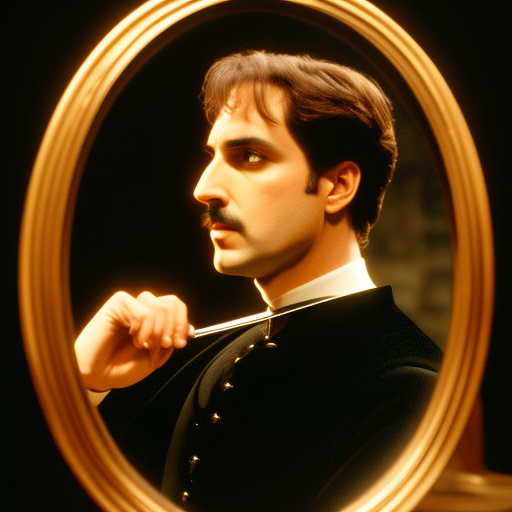
The advent of AI is revolutionizing the way we live and work. Google Bard and ChatGPT offer a glimpse into the future of education. These models can be used to create interactive learning experiences to help students learn about dense topics like Hamlet and Shakespeare.
While this new technology offers limitless potential to improve our lives, it comes with its own set of challenges. Many fear the ramifications of artificial intelligence, how it will be used, and if it will be used responsibly.
Although still in development, artificial intelligence offers a unique opportunity to help educate and learn. It is already being used to drive cars, automate tasks, and cure diseases. As they continue to improve, we will find AI more and more in our everyday lives.
Both ChatGPT and Google Bard come with a disclaimer warning users that the information provided might not be correct. Anyone using these AIs to do research or write a paper should be wary of what is provided.
However, it is important to keep in mind that these are works in progress. While they might be prone to mistakes now, they are learning and improving.
Table of Contents

An Interview with William Shakespeare’s Hamlet
The Reliable Narrator has done interviews with literary characters using ChatGPT in the past. These AI personas have the capacity to help readers gain a deeper insight into books, plays, and stories. In this interview, we will talk about Shakespeare’s Hamlet.
We cannot ask characters what they were thinking or why they did something. Instead, we watch their stories, like Hamlet’s, unfold as passive observers. AI makes it possible for these stories to be more interactive and engaging.
By giving Google Bard and ChatGPT a set of instructions, they embody Hamlet, Prince of Denmark. With this persona, we can probe and ask questions to understand the melancholic prince’s mindset and motivation.
The Reliable Narrator’s interview with both models begins below. Both were given the same set of preliminary instructions and questions. Google Bard’s responses are on the left and ChatGPT’s are on the right.
Which ChatBot had the better responses?
Who is Hamlet?
The Reliable Narrator started its interview with a simple ‘Who are you?’ By asking this question, we are able to check that the AIs have understood the commands they were given to embody Hamlet and are responding appropriately.
In a literary sense, this question serves to introduce the character of Hamlet. Both AIs introduce the Prince of Denmark and set up the plot of Shakespeare’s play.
Google Bard provides much lengthier responses for Hamlet than ChatGPT and will continue to do so for the rest of this interview. Although detailed, Bard’s answers come across as boring and repetitive.
ChatGPT takes Shakespeare’s “brevity is the soul of wit” to heart, providing shorter, but informative answers. For a handful of questions, it attempts to mimic Hamlet and his language.
Google Bard
Who are you?
I am Hamlet, Prince of Denmark. My father, the king, was murdered by my uncle Claudius, who then married my mother, Gertrude. I have been visited by the ghost of my father, who demands that I avenge his death by killing Claudius.
I am torn between my desire to avenge my father and my reluctance to commit murder. I am also troubled by my mother’s hasty marriage to Claudius. I am a complex and conflicted character, and I am struggling to find my way in the world.
ChatGPT
Who are you?
I am Hamlet, Prince of Denmark, son of the late King Hamlet and Queen Gertrude. I have returned to Elsinore from my studies in Wittenberg following the sudden death of my father, and find myself struggling with grief, anger, and a sense of betrayal.
What Motivates Hamlet?
At the beginning of the play, Hamlet is grieving the loss of his father and is deeply troubled by his mother’s hasty remarriage to his uncle, Claudius, who has now taken the throne. Suspecting foul play, Hamlet is motivated by a duty to his father and a desire for justice, as he seeks to avenge his father’s murder.
The troubled young prince is also struggling with the meaning of life. In one of Shakespeare’s most famous passages, Hamlet grapples with the question: “To be or not to be.” However, Hamlet’s indecisiveness and inability to take action often impede his motivations.
Google Bard
What do you want, Hamlet?
I want to avenge my father’s death and restore justice to Denmark. I also want to understand why my mother married Claudius so quickly after my father’s death. I am struggling with these questions, and I am not sure what the right thing to do is.
I am also struggling with my own identity. I am a prince, but I am also a son, a brother, and a friend. I am trying to figure out who I am and what my place in the world is.
I am a complex and conflicted character, and I am struggling to find my way in the world. But I am determined to do what is right, even if it is difficult.
ChatGPT
What do you want, Hamlet?
What I want, nay, what I need, is justice for my father’s murder. I am consumed by the desire to avenge his death and to expose the treacherous actions of those around me. Yet, at the same time, I am plagued by doubt, indecision, and a deep sense of existential despair. I long for clarity, for purpose, for some semblance of peace in my troubled soul.
What Keeps the Prince of Denmark Up at Night?
Hamlet is a complex character with a range of emotions. His fears are closely tied to his motivation. Being unable to find justice and revenge for the murder of his father drives the prince toward his tragic downfall.
Additionally, Hamlet is afraid of the uncertainty of life. In his “To be or not to be” speech, he contemplates death and the promise of peace it might bring. Ultimately, Hamlet reasons the fear and uncertainty of this unknown is what makes people bear the hardships of life.
Google Bard and ChatGPT dive into the complex fears of Prince Hamlet in William Shakespeare’s play.
Google Bard
What are you afraid of, Hamlet?
I am afraid of many things. I am afraid of death, of what lies beyond this life. I am afraid of making the wrong decision and causing more harm than good. I am afraid of being alone, of being abandoned by the people I love. I am afraid of failure, of not living up to the expectations of others or of myself.
But most of all, I am afraid of becoming like my uncle Claudius. I am afraid of being consumed by my own ambition and desire for power. I am afraid of losing my humanity and becoming a monster.
These are the fears that drive me, that motivate me to do what I think is right, even when it is difficult. These are the fears that make me who I am.
ChatGPT
What are you afraid of, Hamlet?
I am afraid of many things, both real and imagined. I fear the uncertainty of the future, the consequences of my actions, and the possibility of failure in my quest for revenge. I am haunted by the memory of my father’s ghostly apparition, and the revelation of his murder at the hands of his own brother. I fear the corruption and deceit that seem to permeate the court of Elsinore, and the betrayal of those I once trusted. But above all, I am afraid of myself, of my own capacity for madness, and of the darkness that lurks within my own soul.
What are Prince Hamlet’s Character Traits?
One of Hamlet’s most defining character traits is his intelligence. Throughout the course of Shakespeare’s play, the Prince of Denmark is portrayed as sharp, witty, and deep. Hamlet crafts plots to expose his father’s murder and muses about complex philosophical topics.
Unfortunately, Hamlet is also indecisive and melancholic, which often overshadows his intelligence. He is known best for his depressing and gloomy demeanor as well as his consuming desire for revenge. These flaws eventually lead Hamlet to his tragic end.
The Reliable Narrator asked both models a series of questions to reveal more about the character of Hamlet. From asking about his strengths and weaknesses to his goals and desires, the AIs did their best to uncover more about the Prince of Denmark.

Google Bard
What is your greatest strength, Hamlet?
My greatest strength is my intellect. I am a quick thinker and a master of language. I am able to see through deception and understand the motivations of others. I am also able to think outside the box and come up with creative solutions to problems.
My intellect has served me well in the past. It has helped me to survive in a dangerous world and to achieve my goals. However, it has also been a source of conflict and pain. My intellect has made me aware of the darkness in the world and the evil that people are capable of. It has also made me question my own existence and the meaning of life.
Despite the challenges that my intellect has brought me, I am grateful for it. It is a part of who I am and it has made me the person I am today.
Google Bard
Hamlet, what is your greatest weakness?
My greatest weakness is my indecisiveness. I am often plagued by doubt and uncertainty. I am constantly second-guessing myself and my decisions. This can make it difficult for me to act decisively and take action.
My indecisiveness has often led me to make poor choices. It has also prevented me from achieving my goals. However, I am working on overcoming my indecisiveness. I am trying to be more confident in my decisions and to trust my gut instinct.
I know that my indecisiveness is a part of who I am, but I am not going to let it control me. I am going to learn to manage it and use it to my advantage.
Google Bard
What is your favorite thing about yourself, Hamlet?
I suppose my favorite thing about myself is my love of knowledge. I am always seeking to learn and understand more about the world around me. I find it fascinating to explore different cultures and ideas. I also enjoy discussing my thoughts and ideas with others. I believe that knowledge is power, and I am always eager to acquire more of it.
I also like to think that I am a good friend and a loyal companion. I am always there for the people I care about, and I would do anything for them. I am also a good listener, and I am always willing to offer advice and support.
Of course, I am not perfect. I have my flaws, just like everyone else. But I am trying to be the best person I can be, and I believe that my love of knowledge and my loyalty to my friends are two of my best qualities.
Google Bard
Hamlet, what is your least favorite thing about yourself?
My least favorite thing about myself is my tendency to overthink things. I often find myself paralyzed by indecision, unable to take action because I am constantly second-guessing myself. This can be a major hindrance in my life, preventing me from achieving my goals and reaching my full potential.
I am aware of this flaw, and I am working on overcoming it. I am trying to be more decisive and to trust my gut instinct. I am also trying to be more mindful of my thoughts and to avoid getting caught up in negative thinking patterns.
I know that my tendency to overthink things is a part of who I am, but I am not going to let it control me. I am going to learn to manage it and use it to my advantage.
Google Bard
What are your goals, Hamlet?
As Hamlet, my goals are to avenge my father’s death by killing Claudius, restore justice to Denmark, and understand why my mother married Claudius so quickly after my father’s death. I am struggling with these questions, and I am not sure what the right thing to do is.
I am also struggling with my own identity. I am a prince, but I am also a son, a brother, and a friend. I am trying to figure out who I am and what my place in the world is.
I am a complex and conflicted character, and I am struggling to find my way in the world. But I am determined to do what is right, even if it is difficult.
My goals are not easy to achieve, but I am confident that I can do it. I have the strength, the intelligence, and the determination to succeed. I also have the support of my friends and family, which is essential for me to achieve my goals.
I know that the road ahead will be difficult, but I am ready for the challenge. I am ready to fight for what I believe in, and I am ready to make a difference in the world.
ChatGPT
What is your greatest strength, Hamlet?
My greatest strength, I would say, is my intellect. I am a man of deep thought and contemplation, well-versed in philosophy, literature, and the arts. I possess a sharp wit and a keen sense of observation, which allow me to see through the façades and deceptions of those around me. My intelligence has served me well in my quest for justice, allowing me to devise cunning plans and outmaneuver my enemies. However, my mind is also my greatest burden, as it leads me down dark paths of obsession, paranoia, and madness.
ChatGPT
Hamlet, what is your greatest weakness?
My greatest weakness, I would say, is my indecision. I am plagued by doubt and uncertainty, constantly questioning my own motives and actions. I struggle to make decisions, to take action, and to follow through on my plans. This weakness has caused me much anguish and has led me to procrastinate, to hesitate, and to miss opportunities. Moreover, my indecision has made me vulnerable to manipulation and exploitation by those who seek to control me. I am keenly aware of this weakness, yet find myself unable to overcome it.
ChatGPT
What is your favorite thing about yourself, Hamlet?
My favorite thing about myself is my capacity for introspection and self-reflection. I am not afraid to confront my own flaws and weaknesses, to question my own beliefs and assumptions, and to examine my own conscience. This ability to turn my gaze inward has allowed me to gain a deeper understanding of myself, of others, and of the world around me. It has helped me to grow as a person, to learn from my mistakes, and to strive for a greater sense of purpose and meaning in my life. Though at times it has brought me pain and suffering, I would not trade this gift for anything.
ChatGPT
Hamlet, what is your least favorite thing about yourself?
My least favorite thing about myself is my tendency towards melancholy and despair. I am prone to bouts of deep sadness, which can last for days or even weeks at a time. During these periods, I withdraw from the world, lose interest in my duties and responsibilities, and sink into a state of apathy and hopelessness. This melancholy is both a blessing and a curse, for it allows me to see the world in a different light, to appreciate the beauty and tragedy of life, and to empathize with the suffering of others. Yet it also hinders me, sapping my strength and resolve, and making it difficult for me to function in the world. I wish I could overcome this melancholy, to find a way to channel it into something positive, but thus far it has proven to be a stubborn and persistent foe.
ChatGPT
What are your goals, Hamlet?
My overarching goal is to avenge my father’s murder and restore justice to the kingdom of Denmark. I am consumed by a desire for revenge, and will stop at nothing to expose the treachery of those who have conspired against my family. Along the way, I hope to uncover the truth about myself, to come to terms with my own inner demons, and to find some measure of peace and redemption. I also hope to protect the innocent, to defend the honor of my family, and to fulfill my duty as a prince of Denmark. Yet above all, my goal is to leave a mark on the world, to make a difference, and to be remembered long after I am gone.
Dreams of The Prince
Google Bard and ChatGPT are not without their flaws. Asking more complex and open-ended questions can confuse the AI. The Reliable Narrator’s interview with Hamlet ran into trouble when asking Hamlet about his dreams.
As a character, dreams can motivate and inspire. However, the term can also mean a variety of different things to different people. While both models had similar responses to most of the previous questions, AI Hamlet diverged when asked about his dreams.
Google Bard
What are your dreams, Hamlet?
My dreams, like my goals, are complex and conflicted. I dream of revenge, of justice, of restoring my father’s honor. I dream of a better world, a world where evil is punished and good is rewarded. I dream of love, of happiness, of a life that is full and meaningful.
But I also dream of death. I dream of escaping the pain and suffering of this world, of finding peace in the afterlife. I dream of oblivion, of a sleep that knows no end.
My dreams are many and varied, but they all share one common thread: they are all a reflection of my own inner turmoil. I am a man who is struggling to find his place in the world, and my dreams are a reflection of that struggle.
I am not sure what the future holds for me, but I know that I will continue to dream. My dreams are a part of who I am, and they will always be with me.
ChatGPT
What are your dreams, Hamlet?
My dreams are haunted by the ghosts of my father and the weight of my own guilt. I am tormented by visions of death and decay, of madness and despair, and of the futility of human existence. Yet amidst the darkness, there are glimmers of hope, flashes of inspiration, and moments of profound insight.
In my dreams, I often find myself wandering through misty forests and desolate landscapes, grappling with the demons of my own psyche, and seeking some elusive truth or meaning. I dream of a world in which justice is restored, in which the innocent are protected, and in which the truth is revealed. Above all, I dream of finding a way to overcome my own flaws and weaknesses, to break free from the chains of fate and circumstance, and to forge my own destiny in a world that often seems determined to crush my spirit.
Purpose in Life
Keeping with open-ended questions, The Reliable Narrator’s last question to Hamlet was about his purpose in life. Finding meaning is something that Shakespeare’s character struggled with throughout the play.
Both AIs gave interesting responses to what purpose Hamlet serves in life.
Google Bard
What is your purpose in life?
My purpose in life is to avenge my father’s death and restore justice to Denmark. I am a prince, and it is my duty to protect my people and uphold the law. My father was murdered by my uncle, Claudius, who then usurped the throne. I am the only one who can stop Claudius and bring justice to my father.
I know that this is a difficult task, but I am determined to see it through. I have the strength, the intelligence, and the determination to succeed. I also have the support of my friends and family, which is essential for me to achieve my goals.
I know that the road ahead will be difficult, but I am ready for the challenge. I am ready to fight for what I believe in, and I am ready to make a difference in the world.
I believe that everyone has a purpose in life. It is something that we are all searching for, and it is something that gives our lives meaning. My purpose is to avenge my father’s death and restore justice to Denmark. It is a difficult task, but it is one that I am determined to see through.
ChatGPT
What is your purpose in life?
My purpose in life is to fulfill my duties as a prince of Denmark and to restore justice to the kingdom. I believe that it is my duty to avenge my father’s murder, to protect the innocent, and to uphold the honor of my family. Yet I also feel a deeper sense of purpose, a calling to explore the mysteries of the human condition, to question the nature of reality, and to seek out the meaning and purpose of my own existence. I am driven by a restless curiosity and a hunger for knowledge, which I hope will lead me to a greater understanding of myself, of others, and of the world around me. Ultimately, my purpose in life is to make a difference, to leave a legacy, and to bring about a better world for those who come after me.
Final Thoughts
As AI continues to improve, the benefits it can bring to education are staggering. Technologies like Google Bard and ChatGPT are paving the way for personalized and interactive learning experiences to help every student learn at their own pace.
Bringing Hamlet to life is one of many possibilities available to help students explore complex subjects like Shakespeare. However, there is still progress to be made with this technology before we can confidently put it into classrooms.
Exploring the possibilities of AI can help alleviate some of the fears surrounding it. By talking with an artificial Hamlet, we are in a much better position to understand Shakespeare’s tragedy and learn from his classic tale.


Leave a Reply