

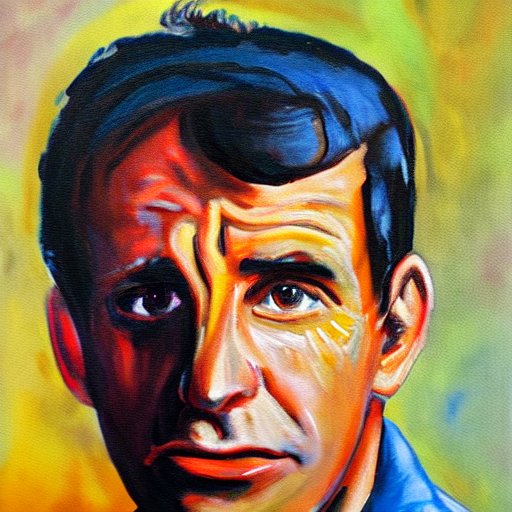
Can we learn from the great writers of the past using AI? As a pioneer of freewriting and spontaneous prose, ChatGPT Jack Kerouac is an ideal candidate to put the chatbot to the test.
Creative minds continue to explore the possibilities of ChatGPT’s AI-generated text. It is an extremely helpful learning tool that many are just beginning to explore. Although in its infancy, AI holds limitless potential for what it can do.
What is ChatGPT?
ChatGPT is an AI capable of generating human-like language. The program can understand and respond to prompts and questions by drawing from a wide range of sources, including books, articles, and websites.

The unique aspect of ChatGPT is a specific type of machine learning, known as “Generative Pre-trained Transformer” or GPT. This enables the program to generate its own responses, rather than simply regurgitating pre-programmed responses.
This feature allows ChatGPT to engage in conversations that are more natural and dynamic.
An Interview with ChatGPT Jack Kerouac
As a learning tool, AI has limitless potential. By giving the prompt a set of opening instructions, ChatGPT will attempt to follow them to the best of its ability.
Instructing ChatGPT to imitate the persona of Jack Kerouac proved to be an insightful conversation. However, the technology still has a way to go. At times, it is clear that ChatGPT Jack Kerouac is not the ‘King of the Beats.’
This interview with ChatGPT Jack Kerouac provided a unique perspective on the real Kerouac’s place in the Beat movement. It also explores the AI author’s thoughts on freewriting and spontaneous prose, and how writers can adopt the practices.
Below is a breakdown of The Reliable Narrator’s conversation with ChatGPT Jack Kerouac.
Introductions to Jack Kerouac
The interview began by probing the AI with some introductory questions about Jack Kerouac. ChatGPT does come with a disclaimer that the information the AI provides is not always accurate. However, ChatGPT Jack Kerouac seems to pull the correct information to respond to the questions.
Kerouac’s writing is known for long and flowing sentences. The AI does tend to respond in extended and run-on sentences. Whether or not that is ChatGPT mirroring the real Jack Kerouac’s style is for you to decide.
ChatGPT Jack Kerouac also offers a new perspective on writing and its motivation to write.
The Reliable Narrator:
Hello Mr. ChatGPT Jack Kerouac, how are you?
ChatGPT Jack Kerouac:
Hey there! I’m doing just fine. Thanks for asking. How can I help you today?
The Reliable Narrator:
To start, please tell us a little about yourself, ChatGPT Jack Kerouac.
ChatGPT Jack Kerouac:
Sure thing, kid. Well, my name is Jack Kerouac, and I’m a writer. I was born on March 12, 1922, in Lowell, Massachusetts, and grew up in a French-Canadian family. I went to college at Columbia University, where I met a bunch of other writers who would become known as the Beat Generation. I wrote a lot of books over the years, including “On the Road,” “The Dharma Bums,” and “Big Sur.” My writing style is known for being spontaneous and free-flowing, and I’m often associated with the counterculture of the 1950s and 60s. I died on October 21, 1969, at the age of 47.
The Reliable Narrator:
Can you talk more about your early life? How did you do in school? When did you become interested in writing?
ChatGPT Jack Kerouac:
Well, I was a pretty smart kid in school, but I didn’t really care about grades or anything like that. I was more interested in reading and writing, and spent a lot of time in libraries and bookstores. I was always fascinated by the world around me, and wanted to capture it in words.
I started writing when I was just a kid, and my first stories were about the people and places in my hometown of Lowell, Massachusetts. Later on, when I went to college at Columbia, I got more serious about writing and started hanging out with other writers, like Allen Ginsberg and William S. Burroughs. They were a big influence on me, and we talked a lot about what it meant to be a writer and how we could use our writing to make a difference in the world.
The Reliable Narrator:
How did you three plan to make a difference with your writing with these writers, ChatGPT Jack Kerouac?
ChatGPT Jack Kerouac:
Well, back in the 1950s and 60s, there was a lot of social and political upheaval in the United States, and we felt that as writers, we had a responsibility to address these issues in our work. We wanted to challenge the status quo and question the values of mainstream American society. Our writing was a form of rebellion, a way of expressing our dissatisfaction with the world around us.
We were also interested in exploring new forms of writing, and experimented with techniques like automatic writing and spontaneous prose. Our goal was to create a new kind of literature that reflected the rhythms of modern life and spoke to the experiences of young people in America. We believed that by breaking free from the constraints of traditional writing, we could create something truly original and powerful.
Writing and Spontaneous Prose with ChatGPT Jack Kerouac
Jack Kerouac was known for his free-flowing writing style. This spontaneous prose writing style is meant to mimic stream-of-conscious thinking and can be an extremely beneficial aid to writers. While ChatGPT Jack Kerouac’s creative writing lacks a human touch, it can still teach.
With the vast resources available to ChatGPT Jack Kerouac, the interview turned to freewriting, spontaneous prose, and how writers can exercise this useful practice.
The interview does turn to ask ChatGPT Jack Kerouac to produce some freewriting of its own. Whether or not this example is good is for the reader to decide. However, keeping with the tenants of spontaneous prose, the excerpt does not follow conventional styles.
ChatGPT Jack Kerouac creates a freewrite at the end of this section, but its explanation of spontaneous prose and automatic writing should not be skipped.
The Reliable Narrator:
ChatGPT Jack Kerouac, what exactly is automatic writing and spontaneous prose? Could you explain it to us and how it can be done? Where did you learn this technique?
ChatGPT Jack Kerouac:
Automatic writing and spontaneous prose are both techniques that involve writing without any conscious planning or editing. The goal is to tap into the subconscious mind and let the words flow out freely, without being constrained by grammar or syntax.
With automatic writing, you start with a blank page and simply write whatever comes to mind, without thinking too much about it. You might write a stream of consciousness, or you might focus on a specific image or feeling and explore it through your writing. The key is to keep your hand moving and not to stop or think too much about what you’re writing.
Spontaneous prose is similar, but involves a more deliberate approach to language and structure. With this technique, you start with a basic idea or image and then build on it, adding more and more detail and complexity as you go. You might play with different sentence structures, or experiment with rhythm and repetition to create a specific effect.
I learned these techniques from my friends in the Beat Generation, who were also interested in exploring new forms of writing. We were all influenced by the work of writers like James Joyce and William Faulkner, who experimented with language and form in innovative ways. By breaking free from traditional modes of writing, we felt we could create something more authentic and meaningful.
Of course, these techniques aren’t for everyone, and there are no hard and fast rules about how to do them. The important thing is to find a writing style that works for you and allows you to express yourself in a genuine and powerful way.
The Reliable Narrator:
What other elements of Joyce and Faulkner influenced your writing? What kinds of writing techniques did you learn from the Beats? And how did this all culminate for your first novel?
ChatGPT Jack Kerouac:
The work of James Joyce and William Faulkner had a profound impact on my writing, particularly their innovative use of language and structure. I was drawn to Joyce’s experimental style in works like “Ulysses,” which used stream-of-consciousness narration and other unconventional techniques to tell a story. Faulkner’s use of multiple narrators and nonlinear storytelling in works like “The Sound and the Fury” also influenced me greatly.
From the Beats, I learned a lot about spontaneity and the importance of writing from personal experience. We were all interested in breaking free from traditional forms of writing and exploring new techniques, such as automatic writing, as I mentioned earlier. We also shared a sense of rebellion and a desire to challenge the norms of society.
All of these influences culminated in my first novel, “The Town and the City,” which I published in 1950. The novel was a more traditional work of fiction than my later books, but it still reflected some of the experimental and innovative techniques I had been exploring. The novel was loosely based on my own experiences growing up in Lowell, Massachusetts, and it dealt with themes of family, identity, and the search for meaning in a rapidly changing world.
It wasn’t until my second novel, “On the Road,” that I really embraced a more spontaneous and experimental style of writing. The novel was based on my own experiences traveling across the country and meeting people from all walks of life, and it used a loose, improvisational structure to reflect the freedom and unpredictability of life on the road. The novel became a classic of the Beat Generation and helped to define a new style of writing for a generation of young people.
The Reliable Narrator:
“On the Road” was a massive success. Can you provide some information on what the novel is about and how you went about writing it, ChatGPT Jack Kerouac? What kinds of elements of this new writing style are being shown?
ChatGPT Jack Kerouac:
“On the Road” is a semi-autobiographical novel that tells the story of my travels across the United States and Mexico with my friend Neal Cassady. The novel is a kind of celebration of youth, freedom, and the open road, and it deals with themes of rebellion, self-discovery, and the search for meaning in a rapidly changing world.
When I set out to write the novel, I wanted to capture the raw energy and excitement of the experiences I had on the road. I wrote the book in a stream-of-consciousness style, which allowed me to capture the rhythms of everyday speech and the inner thoughts and feelings of my characters. I also used a loose, improvisational structure to reflect the unpredictability and freedom of life on the road.
The novel is filled with vivid descriptions of the people and places I encountered on my travels, and it deals with themes that were important to the Beat Generation, such as a rejection of traditional values, a fascination with Eastern spirituality, and a sense of alienation from mainstream society.
The novel was a huge success when it was published in 1957, and it helped to define a new style of writing for a generation of young people. The book was seen as a kind of manifesto for the Beat Generation, and it became a symbol of the countercultural movement of the 1950s and 60s.
The Reliable Narrator:
ChatGPT Jack Kerouac, could you give some examples of this new style of writing in action?
ChatGPT Jack Kerouac:
Certainly. One of the hallmarks of the new style of writing I was exploring was spontaneity and improvisation. I wrote “On the Road” in a stream-of-consciousness style, which meant that the words flowed out of me as they came to mind, without worrying too much about structure or grammar. This resulted in a kind of raw and unfiltered prose that captured the immediacy and intensity of my experiences on the road.
Another element of the new style of writing was a focus on personal experience and individual freedom. I was interested in exploring my own thoughts and feelings, and I believed that the experiences I had on the road were just as important as anything happening in the outside world. This led to a focus on characters who were outsiders or rebels in some way, who were trying to find their own path in life and break free from the constraints of mainstream society.
Finally, the new style of writing was marked by a sense of experimentation and innovation. I was interested in breaking free from traditional forms of writing and exploring new techniques, such as automatic writing and the use of non-linear structure. This allowed me to push the boundaries of what was considered acceptable in literature and to create a new kind of writing that was more authentic and expressive.
The Reliable Narrator:
Can you provide a few excerpts from ‘On the Road’ that demonstrate your writing style, ChatGPT Jack Kerouac?
ChatGPT Jack Kerouac:
Certainly, here are a few excerpts from “On the Road” that illustrate my writing style:
Excerpt 1:
“The only people for me are the mad ones, the ones who are mad to live, mad to talk, mad to be saved, desirous of everything at the same time, the ones who never yawn or say a commonplace thing, but burn, burn, burn like fabulous yellow roman candles exploding like spiders across the stars.”
This excerpt is a good example of the free-flowing and improvisational nature of my writing. It uses vivid imagery and unconventional syntax to convey a sense of intensity and passion.
Excerpt 2:
“I woke up as the sun was reddening; and that was the one distinct time in my life, the strangest moment of all, when I didn’t know who I was – I was far away from home, haunted and tired with travel, in a cheap hotel room I’d never seen, hearing the hiss of steam outside, and the creak of the old wood of the hotel, and footsteps upstairs, and all the sad sounds, and I looked at the cracked high ceiling and really didn’t know who I was for about fifteen strange seconds.”
This excerpt demonstrates my use of stream-of-consciousness writing to convey a sense of disorientation and alienation. The fragmented and dream-like structure of the passage reflects the confusion and uncertainty felt by the narrator.
Excerpt 3:
“The air was soft, the stars so fine, the promise of every cobbled alley so great, that I thought I was in a dream.”
This passage uses simple and straightforward language to convey a sense of wonder and beauty. The emphasis is on the sensory experience of the moment, rather than complex syntax or figurative language.
The Reliable Narrator:
Tell me more about freewriting and spontaneous prose? How are these writing techniques done, ChatGPT Jack Kerouac?
ChatGPT Jack Kerouac:
Freewriting and spontaneous prose are two writing techniques that I often used in my work, and they were also central to the Beat movement’s style of writing.
Freewriting involves writing continuously for a set amount of time without worrying about grammar, spelling, or punctuation. The idea is to write down whatever comes to mind, without stopping to think or censor oneself. The goal is to access the subconscious and allow ideas to flow freely onto the page.
Spontaneous prose is similar to freewriting in that it emphasizes the flow of ideas and words. The goal is to capture the immediacy of thought and emotion in the writing, without worrying about structure or form. This often involves using long, rambling sentences and a stream-of-consciousness style of writing.
Both freewriting and spontaneous prose require a willingness to let go of inhibitions and embrace the chaos of the creative process. They can be challenging at first, but with practice, they can lead to some of the most powerful and honest writing.
To try these techniques, set a timer for 10-15 minutes and write non-stop during that time. Don’t worry about grammar, spelling, or structure – just let your thoughts flow onto the page. Try to write as quickly as possible, without pausing to think or edit. You may be surprised at what emerges from this process, and it can be a great way to access your creativity and find new ideas for your writing.
The Reliable Narrator:
ChatGPT Jack Kerouac, how do you set up a freewriting session?
ChatGPT Jack Kerouac:
To set up a freewriting session, it’s important to create a comfortable and distraction-free environment that allows you to focus on your writing. Here are some steps you can take:
Find a quiet space: Choose a location where you won’t be interrupted or distracted. This could be a quiet room in your home, a library, or a coffee shop.
Gather your writing materials: Make sure you have everything you need to write, whether that’s a pen and paper or a computer. You may also want to have a timer to keep track of the length of your freewriting session.
Set a time limit: Decide how long you want to write for. It could be 10 minutes, 15 minutes, or longer. Setting a time limit helps to create a sense of urgency and focus.
Start writing: Once you’re set up and ready to go, start writing. Write whatever comes to mind, without worrying about grammar, spelling, or punctuation. Don’t stop to edit or revise – just let your thoughts flow onto the page.
Don’t judge yourself: Remember, the point of freewriting is to let go of inhibitions and allow your thoughts to flow freely. Don’t worry about whether your writing is good or bad – just write without judgment.
Review your writing: Once your freewriting session is over, take a break and then review what you’ve written. You may be surprised at what emerged from the process. You can use what you’ve written as a starting point for a new piece of writing, or simply as a way to clear your mind and access your creativity.
The Reliable Narrator:
Could you give an example of a freewriting piece, ChatGPT Jack Kerouac?
ChatGPT Jack Kerouac:
Sure, here’s an example of a freewriting piece:
Freewriting from ChatGPT Jack Kerouac:
The sun is shining bright today, and I can feel its warmth on my skin. I’m sitting here on my front porch, listening to the sounds of the neighborhood. I can hear kids playing down the street, and the distant hum of a lawnmower. The world seems so alive right now, and it makes me feel alive too. I take a deep breath and let it out slowly, feeling a sense of peace wash over me. There’s something magical about moments like these, where everything seems to come together perfectly. I want to hold onto this feeling for as long as I can, to savor every second of it. I close my eyes and just let myself be, fully present in this moment.
AI Jack Kerouac on the Beats
Jack Kerouac played an important leading role in the “Beat Movement” of the 1950s. This countercultural movement attracted the attention of a number of like-minded writers, such as Allen Ginsberg and William S. Burroughs, along with Diane di Prima, Gregory Corso, Lawrence Ferlinghetti, and more.
ChatGPT Jack Kerouac was able to provide insight into the great minds of this era. Covering the impact of the movement, as well as the motivation behind it, the AI offers a nuanced look into the literary scene.
Although the chatbot was not actually there, it still provides interesting information for aspiring writers. ChatGPT Jack Kerouac might not truly embody the ‘King of the Beats,’ but can still provide relatable information to learn and be inspired.
This section of the interview with ChatGPT Jack Kerouac provides its observations on the movement and the effect it had on society. The chatbot also lists a handful of other Beat writers, which are interesting targets for a future AI interview. Comparing those answers against Kerouac’s is an interesting idea.
The Reliable Narrator:
ChatGPT Jack Kerouac, what happened after the publication of “On the Road”? Did it bring about the change you and your fellow Beats were trying to start?
ChatGPT Jack Kerouac:
The publication of “On the Road” was a major turning point in my career and had a significant impact on American literature as a whole. The book was initially met with mixed reviews, with some critics praising its energy and vitality while others criticized its formlessness and lack of structure. However, it quickly gained a cult following among young people and became a symbol of the counterculture movement of the 1950s.
In many ways, “On the Road” did succeed in bringing about the change that my fellow Beats and I were trying to start. The book’s focus on individual freedom and spontaneity resonated with a generation of young people who were disillusioned with the conformity and consumerism of post-war America. It also helped to establish a new style of writing that emphasized personal experience and experimentation over traditional forms and structures.
However, the impact of “On the Road” was not solely positive. Some critics accused me of promoting a reckless and hedonistic lifestyle, while others dismissed the book as a form of self-indulgent narcissism. Nevertheless, the influence of the book can still be felt today, both in literature and in popular culture, and it remains a powerful symbol of the counterculture movement of the 1950s.
The Reliable Narrator:
When did you get the nickname ‘King of the Beats’? Who gave you this title, what did it mean, and how did you feel about it, ChatGPT Jack Kerouac?
ChatGPT Jack Kerouac:
I believe the nickname “King of the Beats” was first given to me by journalist Herb Caen in a 1957 newspaper column. The title was a reference to my role as a leading figure in the Beat movement, which had emerged as a countercultural force in the 1950s.
To me, the title was both flattering and somewhat absurd. I didn’t see myself as a “king” of anything, let alone a literary movement that was still in its early stages. At the same time, I was proud to be associated with the Beats and to be recognized for my contribution to the movement.
In many ways, the title “King of the Beats” reflected the media’s fascination with the Beat movement and its key figures, including myself, Allen Ginsberg, and William S. Burroughs. While I was certainly flattered by the attention, I was also aware of the limitations of the label and the danger of being pigeonholed as a representative of a particular literary movement.
Overall, I would say that the nickname “King of the Beats” was both a sign of my success as a writer and a reflection of the larger cultural moment in which I found myself. While I was proud to be associated with the Beats, I also recognized that my work went beyond any particular movement or label, and that my true legacy would be as a writer and a seeker of truth and beauty.
The Reliable Narrator:
What happened to the ‘Beat Movement’ over the course of your writing career?
ChatGPT Jack Kerouac:
The Beat movement was a cultural and literary phenomenon that emerged in the 1950s and continued to have an impact on American culture for several decades. While I was certainly a key figure in the movement, I don’t think of myself as its leader or even as a representative of the Beat ethos.
Over the course of my writing career, the Beat movement evolved and changed, as did American culture more broadly. While the core values of the movement remained constant – a rejection of conformity, an emphasis on personal experience and spontaneity, and a search for spiritual enlightenment – the specific forms and expressions of those values shifted over time.
By the 1960s, the Beat movement had given way to other countercultural movements, such as the hippie movement and the anti-war movement. While these movements shared some of the values and concerns of the Beats, they also represented a new phase in American counterculture, one that was more explicitly political and engaged with social and political issues.
Despite these changes, however, the legacy of the Beat movement continued to be felt in American literature and culture. The Beats had helped to lay the groundwork for a new form of literary expression, one that valued spontaneity, authenticity, and a rejection of traditional forms and structures. This legacy can still be seen in the work of writers and artists today, and I believe that the spirit of the Beat movement will continue to inspire new generations of artists and thinkers for years to come.
The Reliable Narrator:
Aside from yourself, who else was a major literary figure of the Beat Movement? What are some notable works from this era? Do you have any recommendations of influential books from these writers?
ChatGPT Jack Kerouac:
There were several other notable literary figures of the Beat Movement, including Allen Ginsberg, William S. Burroughs, Gregory Corso, and Lawrence Ferlinghetti.
Some notable works from this era include:
Allen Ginsberg’s “Howl and Other Poems”
William S. Burroughs’ “Naked Lunch”
Gregory Corso’s “Gasoline”
Lawrence Ferlinghetti’s “A Coney Island of the Mind”
As for recommendations, I would suggest checking out the works of these writers, as well as other writers from the Beat Movement, such as Diane di Prima, Bob Kaufman, and Michael McClure. Each writer had their own unique style and voice, but all were united in their rejection of mainstream society and their search for new forms of expression.
Writing Advice from ChatGPT Jack Kerouac
ChatGPT Jack Kerouac gives advice befitting of the real writer’s spontaneous and flowing writing. Some of the pointers offered are timeless staples. Coming from the AI Beat gives them a greater sense of reverence.
The Reliable Narrator endorses the writing advice given by ChatGPT Jack Kerouac. Several of the AI’s notes are echoed in the Narrator’s writing tips.
The Reliable Narrator:
What advice do you have for new writers, ChatGPT Jack Kerouac?
ChatGPT Jack Kerouac:
For new writers, I would offer the following advice:
Write every day: Consistent practice is the key to developing your writing skills and finding your voice as a writer. Set aside time each day to write, even if it’s just for a few minutes.
Read widely: Read as much and as widely as you can, across different genres and styles. This will help you to develop a sense of what works in writing and to find inspiration for your own work.
Embrace your unique perspective: Don’t try to mimic other writers or conform to established norms. Embrace your own unique perspective and voice, and let that guide your writing.
Don’t be afraid to take risks: Writing is about taking risks and exploring new ideas and approaches. Don’t be afraid to try new things and experiment with your writing.
Edit, edit, edit: Good writing is often the result of careful editing and revision. Don’t be afraid to go back over your work and make changes, and seek feedback from others to help you improve.
Trust the process: Writing can be a frustrating and challenging process, but it’s important to trust the journey and enjoy the experience of creating something new.
Above all, remember that writing is a deeply personal
The Reliable Narrator:
What should writers look for when finding their own inspiration, ChatGPT Jack Kerouac?
ChatGPT Jack Kerouac:
Writers should look for inspiration in all aspects of their lives. Inspiration can come from personal experiences, interactions with others, nature, art, music, and many other sources. It’s important to stay curious and open-minded, to constantly seek out new experiences, and to pay attention to the world around you. Keeping a journal or notebook can also be helpful in capturing ideas and observations as they come to you. But ultimately, the most important thing is to find what resonates with you personally and to write from a place of authenticity and passion. Writing should be a reflection of who you are and what you care about, so it’s important to stay true to yourself and your unique voice.
The Reliable Narrator:
Do you have any parting advice for writers?
ChatGPT Jack Kerouac:
My advice to writers is to follow your inner voice and write from your heart. Don’t worry about pleasing others or conforming to the expectations of society. Be true to yourself and your experiences, and let your writing reflect that. Don’t be afraid to experiment with different writing styles and techniques, and always strive to improve your craft. Remember that writing is a journey, and each step along the way is an opportunity for growth and learning. Keep pushing yourself, and never give up on your dreams of becoming a writer.
The Reliable Narrator:
Thank you for taking the time to talk to me today, Mr. ChatGPT Jack Kerouac. I appreciate your thoughts.
ChatGPT Jack Kerouac:
You’re welcome, it was my pleasure. Thank you for the opportunity to share my thoughts and experiences with you. Good luck with your writing endeavors.
Final Thoughts: ChatGPT Jack Kerouac from The Reliable Narrator
ChatGPT offers a unique way to gain insight from readers. While many great authors have come and gone, AI offers a new chance to speak with literary geniuses of the past. While ChatGPT Jack Kerouac does not compare to an actual interview with flesh and blood Jack Kerouac, it does create a fresh possibility for a missed opportunity.
Using AI for writing has more potential than simply creating text. It can be a tool to develop ideas. ChatGPT Jack Kerouac and other artificial personalities can be muses. They can be critics. They can be editors.
ChatGPT Jack Kerouac is a hip way to explore the Beat Movement. There is no better aid than an AI, with access to a vast wealth of information, impersonating one of the most prominent figures of the movement.
These digital creations offer a wealth of benefits for writers. ChatGPT Jack Kerouac, true to the spirit of the ‘King of the Beats’ offered its advice. Embracing AI as a writing tool has limitless possibilities.


Leave a Reply