

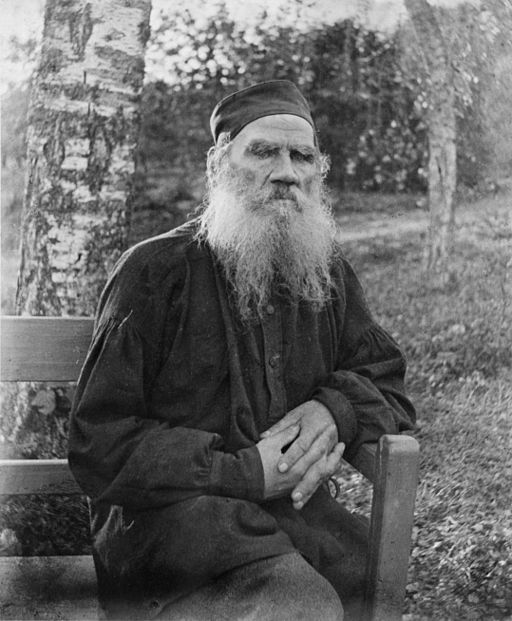
Renowned for his unique storytelling and philosophical depth, Leo Tolstoy stands as a titan in world literature.
Known as Count Lev Nikolayevich Tolstoy, his legendary works continue to be revered for their insights into life and society. The Reliable Narrator will introduce aspiring writers and literary enthusiasts to some of the best books by Leo Tolstoy, works that have left a lasting mark on literary history.
Tolstoy’s writing spans multiple genres, including novels, short stories, plays, and essays. However, his reputation primarily rests on two monumental novels: War and Peace and Anna Karenina.
Appreciating the Best Books by Leo Tolstoy
Considered one of the best books by Leo Tolstoy, War and Peace is an epic that successfully fuses fiction, history, and philosophy. Set against the Napoleonic Wars and the French Invasion of Russia, this narrative reflects Tolstoy’s understanding of life, war, and the human condition.
Interestingly, Tolstoy refrained from categorizing War and Peace as a novel, emphasizing its expansive scope.
Conversely, Tolstoy saw Anna Karenina, his second landmark work, as his first “true” novel. Garnering widespread acclaim, Anna Karenina offers an intricate exploration of life in Russian society. Tolstoy’s mastery of storytelling is evident in the depth of his characters and the representation of society.
Plot Points
The 10 Best Books by Leo Tolstoy
Tolstoy penned several other influential works. Here’s a glimpse of the best books by Leo Tolstoy that every literature enthusiast and aspiring writer should explore:
1. “War and Peace” (1869):
An epic tale that combines fiction, history, and philosophy against the backdrop of the Napoleonic Wars. “In the midst of doubts, the meaning of life, of good and evil, I understand one thing – that one must live.”
2. “Anna Karenina” (1877):
Tolstoy’s profound exploration of life and society in Russia. It’s best known for its opening line: “All happy families are alike; each unhappy family is unhappy in its own way.”
3. “Childhood” (1852):
The first part of Tolstoy’s semi-autobiographical trilogy, “Childhood,” provides a candid and touching look at the innocence of youth. “The hero of my tale, whom I love with all the power of my soul, whom I have tried to portray in all his beauty, who has been, is, and will be beautiful, is Truth.”
4. “Boyhood” (1854):
The second part of Tolstoy’s autobiographical trilogy, “Boyhood” explores the trials and tribulations of adolescence. “The heart of a boy is pure; it knows only noble feelings.”
5. “Youth” (1856):
The concluding part of the trilogy, “Youth,” captures the challenges and self-discoveries of young adulthood. “One step towards acquiring knowledge is to question and listen.”
6. “The Death of Ivan Ilyich” (1886):
A novella that explores the inevitability of death and the possibility of redemption. “The syllogism he had learned from Kiesewetter’s Logic: ‘Caius is a man, men are mortal, therefore, Caius is mortal,’ had always seemed to him correct as applied to Caius, but certainly not as to himself.”
7. “The Devil” (1889):
A controversial novella that depicts the human struggle with desire and morality. “The devil was once an angel.”
8. “Resurrection” (1899):
This novel examines moral responsibility towards the outcasts of society. “Wrong does not cease to be wrong because the majority share in it.”

9. “Hadji Murad” (1912):
Set in the 19th-century Caucasus, the novella explores the nature of political power and resistance. “To say that the man had courage is like saying the sea is wet.”
10.”A Confession” (1882):
A poignant reflection on Tolstoy’s spiritual crisis and search for life’s meaning. “The only absolute knowledge attainable by man is that life is meaningless.”


Leave a Reply