

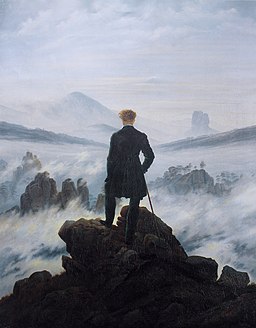
There is more to love than romance. Learning how to write like a romantic poet starts with understanding what the Romantics wrote about.
Romantic writing is more than love and admiration. Writers of the literary movement also expressed their fondness for nature, reverence for the past, and personal expression. To write like a romantic writer, writers should create an idealized version of reality in their prose.

What is Romanticism?
The Romanticism movement began in Europe at the end of the 18th century. It puts a strong focus on the individual and emotion. Romantic literature idolized subjects like nature and beauty while vilifying ideas like science and reason.
Romanticism was a reaction to three significant movements that had exploded across Europe. Understanding the feelings and attitudes of the time can help write like a romantic poet.

The Industrial Revolution
The advent of industry was a monumental event in human history. Machinery and engines raced to replace what had once been done by hand. Electricity lit streets, new production made more goods, and the population boomed.
But in that boom, living conditions plummeted. Urbanization grew unchecked. Workers rushed to find new jobs. But, new opportunities often involved new (and dangerous) machinery.
The Enlightenment
Enlightened thoughts across Europe and the rest of the world led to ideas of liberty and reason. Revolutions formed new nations and governments. Mankind’s happiness guided enlightened thinking.
A Scientific Boom
With the advance of industry also came the advancement of science. Innovations and technology drove progress. However, the rush did not come without consequences. Romantics were very weary of some of the new inventions of the era.
6 Characteristics of Romantic Poetry
Romanticism dealt with six central characteristics. There is no universal checklist for every romantic text. However, several of the following examples could be used interchangeably. To write like a romantic poet, writers should find common topics to express themselves.
Awareness of Emotion and Passion
A near-universal element of romantic writing is emotion. The romantics describe the range of human feelings, from awe and love to horror and despair.
Romantic writers explored the unique passions and struggles of the individual. It was a reaction to the ideas of the Enlightenment. In a world of logic and reason, the unpredictability of emotion was inspirational to the romantics.
In ‘A Divine Image,’ William Blake compares several emotions with poetic descriptions.
A Divine Image
By William Blake
Cruelty has a Human Heart
And Jealousy a Human Face
Terror the Human Form Divine
And Secrecy, the Human Dress
The Human Dress, is forged Iron
The Human Form, a fiery Forge.
The Human Face, a Furnace seal’d
The Human Heart, its hungry Gorge.
Idolization and Praise of Nature
One of the most recurring elements in romantic poetry is nature. A source of inspiration and awe, romantic poets created vivid images of nature’s beauty.
Nature stood opposite to the industrializing and urbanizing cities. Romantic poets disliked the horrible conditions and modern struggle that the Industrial Age brought. The unpredictability of nature symbolized the irrational during a time of growing reason.
This excerpt from Percy Bysshe Shelley’s ‘To a Skylark’ is filled with admiration of the natural world:
Hail to thee, blithe Spirit!
Bird thou never wert,
That from heaven, or near it,
Pourest thy full heart
In profuse strains of unpremeditated art.
Higher still and higher
From the earth thou springest
Like a cloud of fire;
The blue deep thou wingest,
And singing still dost soar, and soaring ever singest.
In the golden lightning
Of the sunken sun,
O’er which clouds are bright’ning,
Thou dost float and run,
Like an unbodied joy whose race is just begun.
– Excerpt from Percy Bysshe Shelley’s ‘To a Skylark’
Celebration of Truth and Imagination
The Romantics rejected the objective truths of the Enlightenment. Instead, they focused on the subjective realities of art and imagination.
Truth, to a Romantic, came through self-expression. There was nothing more honest and divine than individual creativity. The variety of ideas made romantic poets wonder if there could be a single truth.
In his poem ‘All is Truth,’ Walt Whitman argues that everything is truth:
O ME, man of slack faith so long!
Standing aloof–denying portions so long;
Only aware to-day of compact, all-diffused truth;
Discovering to-day there is no lie, or form of lie, and can be none,
but grows as inevitably upon itself as the truth does upon
itself,
Or as any law of the earth, or any natural production of the earth
does.
– Excerpt from Walt Whitman’s ‘All is Truth’
Interest in History and the Past
Romantic poets idolized the good old days and sought to bring the lessons of the ancients into modern times.
Ancient Greece and Rome were popular subjects in the romanticism movement. However, medieval topics reigned supreme. A brave knight rescuing the damsel in distress was a noble idea for romantics.
Volumes of romantic poetry glorify the past. Remembering an idealized version of history is a central element of romantic writing. To write like a romantic poet, writers must welcome a rosy view of the past.
John Keats’ ‘Ode on a Grecian Urn’ sings praises to an ancient stone relic:
Thou still unravish’d bride of quietness,
Thou foster-child of silence and slow time,
Sylvan historian, who canst thus express
A flowery tale more sweetly than our rhyme:
What leaf-fring’d legend haunts about thy shape
Of deities or mortals, or of both,
In Tempe or the dales of Arcady?
What men or gods are these? What maidens loth?
What mad pursuit? What struggle to escape?
What pipes and timbrels? What wild ecstasy?
– Excerpt from John Keats’ ‘Ode on a Grecian Urn’

Glorification of Isolation and Melancholy
To a romantic, quiet solitude is the ideal place to find inspiration. The struggle and exploration that comes with this isolation are necessary to create.
The idea of strong individualism also comes into play. The romantics idealized finding strength in this struggle. Aspiring writers could tap into their struggles to write like a romantic poet.
William Wordsworth’s aptly named poem, ‘I Wandered Lonely as a Cloud,’ begins with the narrator describing their isolation:
I wandered lonely as a cloud
That floats on high o’er vales and hills,
When all at once I saw a crowd,
A host, of golden daffodils;
Beside the lake, beneath the trees,
Fluttering and dancing in the breeze.
Continuous as the stars that shine
And twinkle on the milky way,
They stretched in never-ending line
Along the margin of a bay:
Ten thousand saw I at a glance,
Tossing their heads in sprightly dance.
– Excerpt from William Wordsworth’s ‘I Wandered Lonely as a Cloud’
Exploration of the Spiritual and Supernatural
With their praise of everything in life and nature, the topics of death and the world beyond were unavoidable.
Life and death were often compared and contrasted by the romantics. Feelings of isolation and melancholy mirrored stormy nights and gothic manors. Darker emotions, like jealousy or guilt, could also be manifested through supernatural elements.
In this excerpt from ‘The Rime of the Ancient Mariner,’ Samuel Taylor Coleridge portrays the captain of a ghostly ship as a supernatural horror.
Her lips were red, her looks were free,
Her locks were yellow as gold:
Her skin was as white as leprosy,
The Night-mare LIFE-IN-DEATH was she,
Who thicks man’s blood with cold.
The naked hulk alongside came,
And the twain were casting dice;
‘The game is done! I’ve won! I’ve won!’
Quoth she, and whistles thrice.
The Sun’s rim dips; the stars rush out;
At one stride comes the dark;
With far-heard whisper, o’er the sea,
Off shot the spectre-bark.
– Excerpt from Samuel Taylor Coleridge’ The Rime of the Ancient Mariner’
Types of Poems to Write Like a Romantic Poet
Romantic poets used three specific formats to write poems: sonnets, odes, and elegies. These lyrical poems hold unique benefits to aid in expression. But, each can also present challenges to writers.
Sonnets
Sonnets express their meaning using fourteen lines. From the Italian word sonetto, meaning little song, these brief pieces of prose leave a lasting impression. There are several rhyming patterns a writer could follow, from classical Italian to the more well-known Shakesperian.
Example:
How Do I Love Thee? (Sonnet 43)
Elizabeth Barrett Browning
How do I love thee? Let me count the ways.
I love thee to the depth and breadth and height
My soul can reach, when feeling out of sight
For the ends of being and ideal grace.
I love thee to the level of every day’s
Most quiet need, by sun and candle-light.
I love thee freely, as men strive for right.
I love thee purely, as they turn from praise.
I love thee with the passion put to use
In my old griefs, and with my childhood’s faith.
I love thee with a love I seemed to lose
With my lost saints. I love thee with the breath,
Smiles, tears, of all my life; and, if God choose,
I shall but love thee better after death.
Odes
Odes pay tribute and admiration to their subject. While they can follow a few formats, they are unbound by any requirements of rhyme or meter. Although the rules vary, the theme is almost always celebratory. Aspiring writers looking to write like a romantic poet should look for subjects to praise.
Example:
Ode to a Nightingale
John Keats
(An excerpt)
My heart aches, and a drowsy numbness pains
My sense, as though of hemlock I had drunk,
Or emptied some dull opiate to the drains
One minute past, and Lethe-wards had sunk:
‘Tis not through envy of thy happy lot,
But being too happy in thine happiness,—
That thou, light-winged Dryad of the trees
In some melodious plot
Of beechen green, and shadows numberless,
Singest of summer in full-throated ease.
…
Elegies
Elegies are poems of reflection. They are typically regarded as laments for the dead due to their sad themes. However, elegies have also been used to commemorate. Artists looking to write like a romantic poet should be unafraid of this format.
Example:
When Lilacs Last in the Dooryard Bloom’d
Walt Whitman
(An excerpt)
1
When lilacs last in the dooryard bloom’d,
And the great star early droop’d in the western sky in the night,
I mourn’d, and yet shall mourn with ever-returning spring.
Ever-returning spring, trinity sure to me you bring,
Lilac blooming perennial and drooping star in the west,
And thought of him I love.
2
O powerful western fallen star!
O shades of night—O moody, tearful night!
O great star disappear’d—O the black murk that hides the star!
O cruel hands that hold me powerless—O helpless soul of me!
O harsh surrounding cloud that will not free my soul.
…
Why Write Like A Romantic Poet?
Romantic poets rejected the realities of their time. Cities were overcrowded and dirty. People worked and lived in dangerous and unhealthy conditions. But, the march of progress drove things forward.
To avoid these harsh realities, romantic poets turned away. Untouched nature was a point of beauty. The glory of the past was a place of refuge. Most importantly, the plight of the individual was a noble struggle.
The logic and reason of the time would not bind their world. Instead, the romantics idealized imagination and passion.
A writer’s prose should be filled with idealism and admiration to write like a romantic poet. It can cut through the unrelenting noise of reality. It can also help a writer expose satire. Whatever its intent, romantic writing has a place in the heart of dreamers.


Leave a Reply