

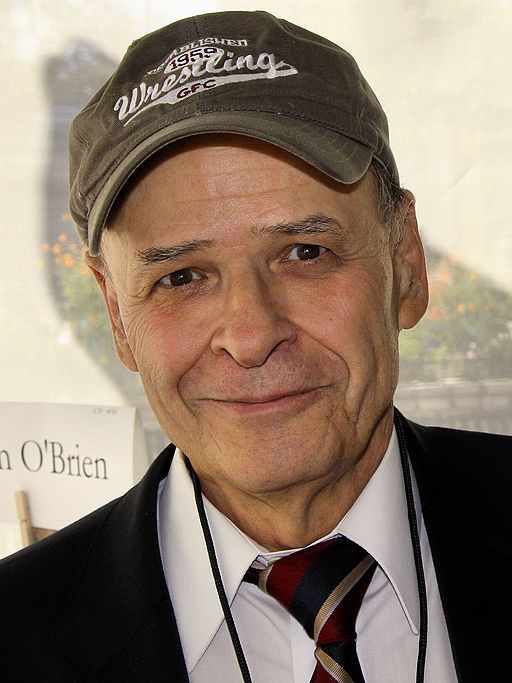
Tim O’Brien was born today in writing history, October 1. Celebrate the author’s birthday by learning more about his life and contributions to the literary world. Aspiring writers should also use this opportunity as a writing exercise. Look for inspiration today in writing history.
Today in Writing: October 1: Tim O’Brien’s Birthday
Tim O’Brien was born on October 1, 1946. He is best known for his novel The Things They Carried. O’Brien’s work is semi-autobiographical, inspired by his experiences during the Vietnam War.
Aspiring writers should study aspects of the author’s writing style. O’Brien’s ability to blur fiction and reality is beneficial for storytellers to adopt. Combining experience and invention will help a story connect with readers. Find inspiration in the stories, works, and words for this installment of Today in Writing: October 1.

Writing Prompts for Today In Writing: October 1
Take this opportunity to learn more about Tim O’Brien and his ability to tell stories using elements of fiction and truth. O’Brien’s writing tells the story of a generation conscripted to fight a war in a distant country. The author’s text immortalizes the things these men saw and the tragedies they experienced.
What led Tim O’Brien to be a writer? Where did the inspiration to tell his stories come from? And what helped O’Brien create his unique writing style? Find inspiration about the writer, learn more details about his life, and write!
Tim O’Brien Biography
William Timothy O’Brien was born in Austin, Minnesota, on October 1, 1946. When he was 10, his family moved to Worthington, Minnesota. The town itself would heavily influence O’Brien’s development and writing. Worthington appears as a setting in several of his novels.
O’Brien considered himself a writer from an early age. He was also very studious, attending Macalester College and serving as the student body president. Tim O’Brien earned his B.A. in Political Science in 1968. However, America had been involved in a conflict in Vietnam since 1957. In need of more troops, O’Brien would be drafted into the United States Army the same year.
Tim O’Brien in Vietnam
Tim O’Brien was sent to Vietnam and served as a part of the 23rd (Americal) Infantry Division from 1969 to 1970. His division contained the unit that took part in the infamous My Lai Massacre in 1968. At the time, O’Brien and his comrades were unaware of the atrocity that had occurred but were very aware of the hostility towards American soldiers in the area. Towards the end of his tour of duty, news about the massacre broke, and the situation clicked.
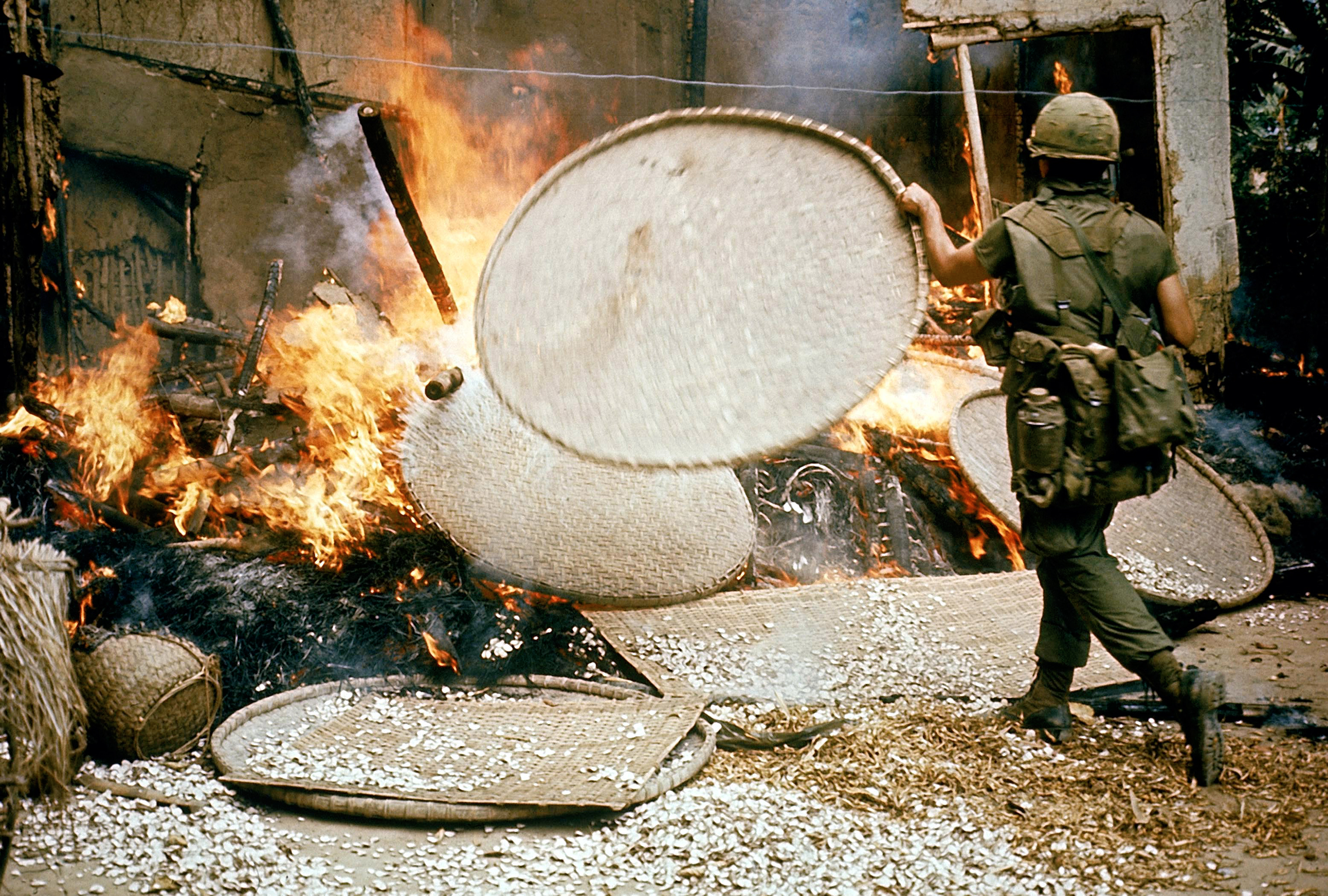

Mỹ Lai Massacre
On March 16, 1968, United States soldiers murdered 347 to 504 unarmed South Vietnamese civilians in Sơn Tịnh District, South Vietnam. Mỹ Lai is the largest publicized massacre of civilians by U.S. forces in the 20th century. The war crime is called “the most shocking episode of the Vietnam War.”
Soldiers of the 20th and 23rd (Americal) Infantry Division murdered unarmed men, women, children, and infants. Women and children as young as 12 were raped and mutilated. While 26 soldiers were charged with criminal offenses, only Lieutenant William Calley Jr. was convicted and given a life sentence. He would ultimately serve less than four years before President Richard Nixon commuted his sentence. Three service members that tried to halt the massacre and assist civilians were initially demonized. However, they would receive commendations for their heroic actions 30 years later.
Post War and Tim O’Brien’s Writing Career
Following his tour of duty, Tim O’Brien returned home and attended graduate school at Harvard University. He would receive an internship at The Washington Post in 1971 and would later work as a reporter. During this time, O’Brien began work on his memoirs.
If I Die in a Combat Zone, Box Me Up and Ship Me Home is an autobiographical account of Tim O’Brien’s tour of duty in Vietnam. The book, published in 1973, was well received by critics. O’Brien offers an unfiltered and personal experience of a young soldier drafted to fight in Vietnam. In the novel, he writes, “Can the foot soldier teach anything important about war, merely for having been there? I think not. He can tell war stories.”
While O’Brien does not consider himself a spokesman for the Vietnam war, he does offer insight into the time. Regarding his childhood home of Worthington, Tim O’Brien wrote that it is: “a town that congratulates itself, day after day, on its own ignorance of the world: a town that got us into Vietnam. Uh, the people in that town sent me to that war, you know, couldn’t spell the word ‘Hanoi’ if you spotted them three vowels.”
Tim O’Brien, The Things They Carried
O’Brien’s third novel, The Things They Carried, was published in 1990 as a response to the ignorance he perceived surrounding the Vietnam conflict. The book is a collection of short stories that tie together narratively. Although a work of fiction, it was also written to be partially autobiographical.

Reception for The Things They Carried was overwhelmingly positive. It quickly made O’Brien’s novel a highly acclaimed piece of Vietnam War literature. The book has sold over 2 million copies, become a beloved text for many young adults, and is standard reading in many classrooms. However, on the latter points, O’Brien reflects he “certainly hadn’t imagined fourteen-year-old kids and eighteen-year-olds and those even in their early twenties reading the book and bringing such fervor to it, which comes from their own lives, really. The book is applied to a bad childhood or a broken home, and these are the things they’re carrying. And in a way, it’s extremely flattering, and other times, it can be depressing.”
Tim O’Brien’s Writing Style, Verisimilitude
Tim O’Brien’s writing style deals heavily with verisimilitude. This concept of lifelikeness is the skill of making a work of fiction plausible or believable. Using his experiences from the war, O’Brien can tell a story using himself as the main character. This lends his writing a level of authority.
However, using the real names of places, people, and events alongside an invented narrative blurs the distinction between fiction and non-fiction. O’Brien’s technique is masterful, and the growing group of readers over the last few decades is a testament to his abilities. Aspiring writers should note the reality created in the author’s works.
Today in Writing: October 1 – 15 Tim O’Brien Quotes
Tim O’Brien’s involvement in the Vietnam War and his awareness of the situation are cornerstones of the author’s works. His writing comes from a place of first-hand experience. Aspiring writers can find inspiration in O’Brien’s reflective and realistic writing.
15 Tim O’Brien Quotes
1. Fiction is a lie that is told in the service of truth.
2. The goal, I suppose, any fiction writer has, no matter what your subject, is to hit the human heart and the tear ducts and the nape of the neck and to make a person feel something about the characters are going through and to experience the moral paradoxes and struggles of being human.
3. It’s very hard to articulate the things that are important about writing.
4. To be memorable and to have dramatic impact, informational detail must function actively within the dynamic of a story.
5. I live in my head all day long and the world is a little dreamy.
6. By telling stories, you objectify your own experience. You separate it from yourself. You pin down certain truths.
7. Working as a journalist, I was always tempted to lie. I felt I could do dialogue better than the person I was interviewing. I felt I could lie better than Nixon and be more concise than some random person I was covering.
8. When writing, I’m not thinking about war, even if I’m writing about it. I’m thinking about sentences, rhythm and story. So the focus, when I’m working, even if it’s on a story that takes place at war, is not on bombs or bullets. It’s on the story.
9. A small, seemingly inconsequential event can determine a life.
10. I hated the draft, but at the same time, it’s something that made every American take war seriously.
11. A true war story is never moral.
12. I learned that moral courage is harder than physical courage.
13. You don’t have to be in Nam to be in Nam.
14. A bullet can kill the enemy, but a bullet can also produce an enemy, depending on whom that bullet strikes.
15. In Iraq and Afghanistan, our soldiers signed up intentionally. That’s a huge difference from the largely conscripted army of my era.
Today in Writing: October 1 – Daily Writing Exercise
Now that you have done some reading, it is time to write. Aspiring writers should look to the stories from Today in Writing: October 1 and Tim O’Brien’s life for their own inspiration. Check through his quotes to spark an idea, or read one of his novels to get a sense of his writing style.
Find a topic from and freewrite for 10 minutes. The writing of Tim O’Brien still creates a vivid image and deep introspection. Aspiring writers should look for inspiration in the author’s experienced approach to writing fiction.
Don’t let any opportunity to write go to waste. Aspiring writers: Practice your writing today. Celebrate Today in Writing History October 1.


Leave a Reply