


Truman Capote was born today in writing history, September 30. Celebrate the author’s birthday by learning more about his life and contributions to the literary world. Aspiring writers should also use this opportunity as a writing exercise. Look for inspiration today in writing history.
Today in Writing: September 30: Truman Capote’s Birthday
Truman Capote was born on September 30, 1924. He is best known for writing Breakfast at Tiffany’s and In Cold Blood. Capote’s works are praised as classics and have been adapted to TV and film over 20 times.
Overcoming hardships at a young age, Truman Capote discovered his love of writing when he was eight. Over his long and illustrious career, Capote honed his craft and penned stories that are still revered today. Aspiring writers should look to adopt the author’s obsession with writing. Find inspiration in the stories, works, and words for this installment of Today in Writing: September 30.

Writing Prompts for Today In Writing: September 30
Take this opportunity to learn more about Truman Capote and his journalistic approach to telling a story. Capote’s writing has firmly embedded itself into pop culture. Breakfast at Tiffany’s is considered a cult classic, and his work in the crime genre continues to inspire contemporary authors.
What led Truman Capote to be a writer? Where did he find inspiration? And what helped Capote shape his distinctive writing style? Find inspiration about the writer, learn more details about his life, and write!
Truman Capote Biography
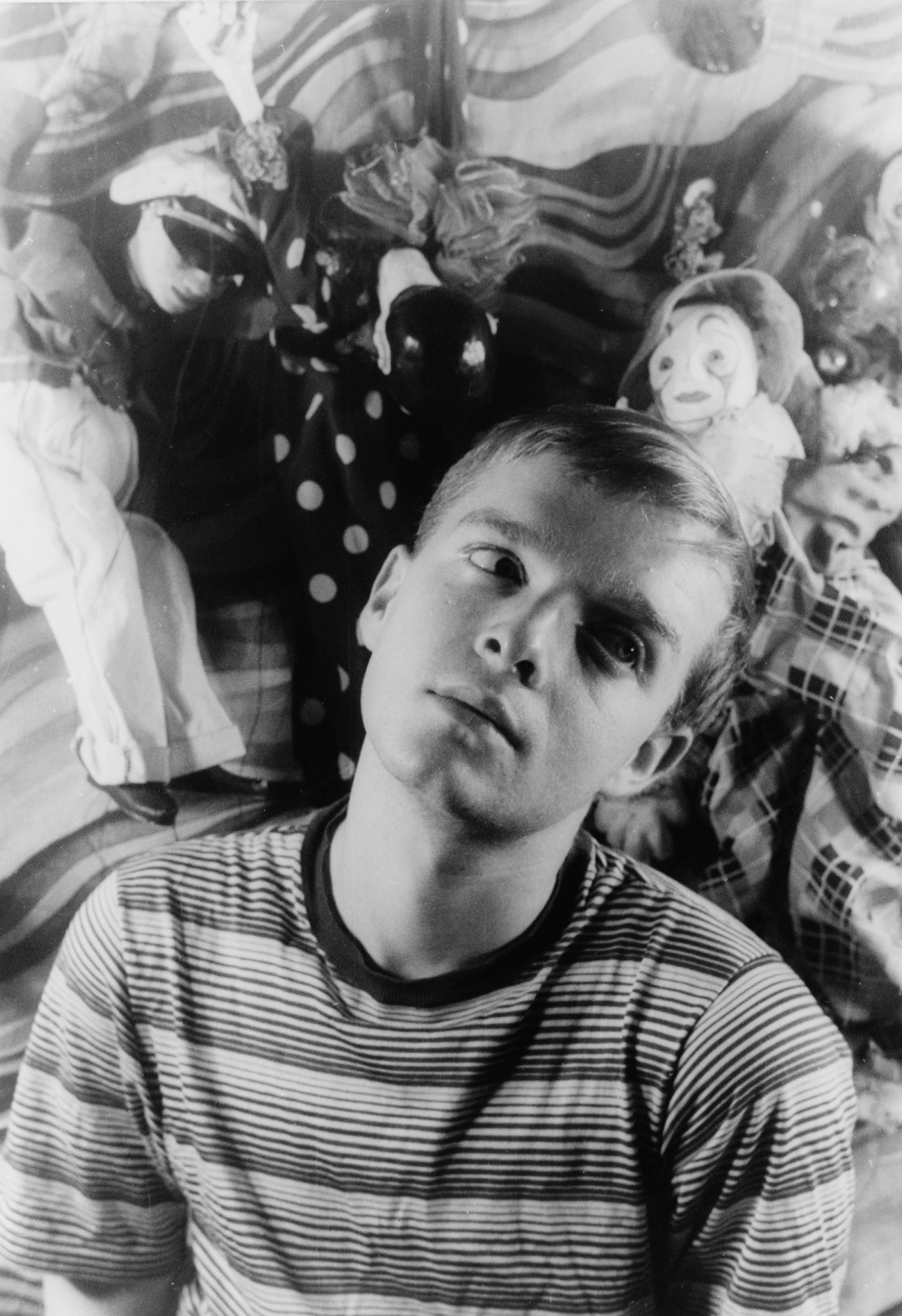
Truman Garcia Capote was born on September 30, 1924, in New Orleans, Louisiana. His birth name, Truman Streckfus Persons, reflected the name of his biological father, Archulus Persons. However, when Truman was two, Archulus and his mother, Lillie Mae Faulk, would divorce.
He would spend the next several years in Monroeville, Alabama, living under the care of his mother’s relatives. It was during this time that Capote’s love of writing exploded. He taught himself to read and write before his first year of school. Truman Capote carried a notepad and dictionary around when he was five. A love of storytelling came shortly after.
Capote was confident in his writing at an early age. The young author submitted one of his short stories to a writing contest sponsored by an Alabama newspaper. Rightfully so, his early work received recognition by the Scholastic Art & Writing Awards in 1936.
His dedication to writing was legendary. On his early writing habits, Truman Capote remarked, “I was writing really sort of serious when I was about 11. I say seriously in the sense that like other kids go home and practice the violin or the piano or whatever, I used to go home from school every day, and I would write for about three hours. I was obsessed by it.”
Truman Capote and Harper Lee
During his time in Monroeville, Truman Capote was neighbors with Harper Lee, who would write the acclaimed To Kill A Mockingbird. Capote considered her his best friend, and the authors would share a close friendship. Lee based the character Dill Harris on Capote. Truman Capote’s work for In Cold Blood was done with Harper Lee at his side.
Capote Moves Around
Truman Capote would move to New York City in 1932 to live with his mother and her second husband, José García Capote. His new stepfather would officially adopt and rename Truman García Capote. However, José would be convicted of embezzlement shortly after, forcing the family into financial trouble.
Capote would attend several schools in New York and Connecticut over his teenage years as his family bounced around. Wherever he landed, he would contribute to school publications and continue his aspirations of being a writer. The Capote family would return to New York City in 1941. Truman attended the Franklin School for his final year of education and graduated in 1942. This marked the end of his formal education.
Truman Capote’s Writing Career
Capote returned to his relatives in Alabama after graduating and focused on his writing career. Between 1943 and 1946, Truman Capote authored a series of short stories, such as Miriam, My Side of the Matter, and Shut a Final Door. His narratives earned him some awards- at 24 years old, he won the 1948 O. Henry Award for Shut a Final Door. However, Miriam’s reception led Capote to the next phase of his career.
Publishers interested in Capote’s short stories approached the author to write a novel. With a $1500 advance, he began writing Other Voices, Other Rooms, which would be published in 1948. Truman Capote started working on the novel in Alabama. As he worked, he would travel, which took the author to New Orleans, New York, North Carolina, and finally, Massachusetts, where he completed the manuscript.
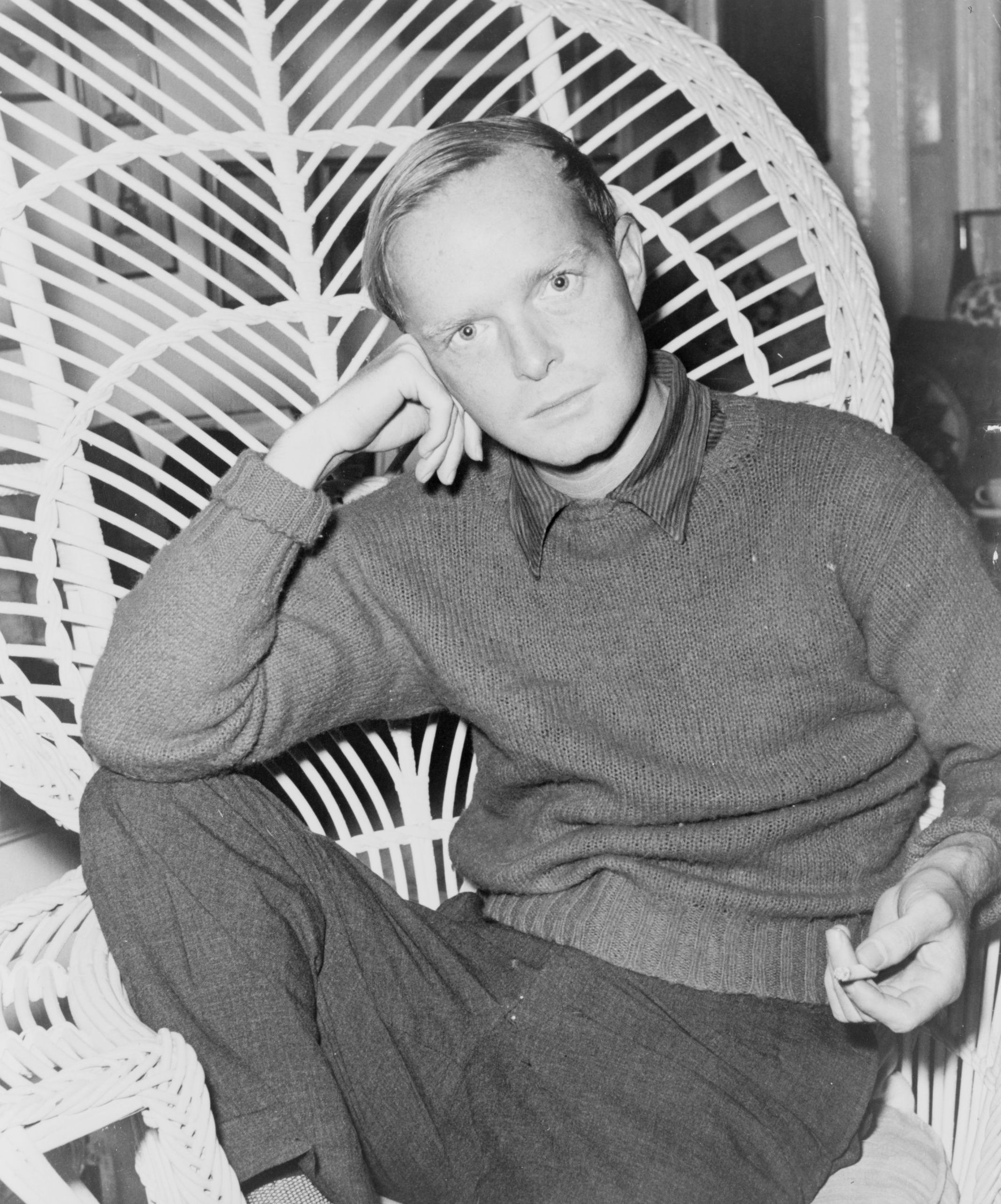
He would continue to write plays, screenplays, and stories throughout his life. His novella, Breakfast at Tiffany’s, was published in 1958 and marked another turning point in his career. Capote published In Cold Blood: A True Account of a Multiple Murder and Its Consequences in 1966. The novel was originally inspired by a November 1959 New York Times article about the unexplained murder of a family in Kansas. Truman Capote, and his friend Harper Lee, traveled to Holcomb, Kansas- the scene of the slaying reported in The Time.
Over the next few years, the duo interviewed everyone involved in the investigation. Capote famously committed these conversations to memory instead of taking notes, claiming he had retained these discussions with over 90% accuracy. The novel was published as non-fiction and earned Capote international acclaim. It would be the author’s last novel.
Later Life and Death

Following the publication of In Cold Blood, Capote became a popular and highly sought-after writer. However, the fame the author achieved would lead to drug and alcohol abuse in his later life. This era of the author’s life is also marked by the loss of his drug rehab, driver’s license, hallucinations, weight loss, a facelift, and hair implants. By the 1980s, Truman Capote has developed a severe reliance on drugs.
Truman Capote died in Bel Air, Los Angeles, on August 25, 1984. The cause of death was attributed to liver disease complicated by phlebitis and multiple drug intoxication. Capote was cremated, and his ashes were divided between Jack Dunphy, fellow author and life partner, and Joanne Carson, a friend and the ex-wife of TV host Johnny Carson.
Today in Writing: September 30 – 13 Truman Capote Quotes
Truman Capote paid meticulous attention to his words. By his own admission, the man was obsessed with writing. Capote crafted his works with devotion and wrote with a passion for putting pen to paper. Aspiring writers can find inspiration in the dedication of Truman Capote.
13 Truman Capote Quotes
1. Life is a moderately good play with a badly written third act.
2. I don’t care what anybody says about me as long as it isn’t true.
3. To me, the greatest pleasure of writing is not what it’s about, but the inner music that words make.
4. Failure is the condiment that gives success its flavor.
5. A conversation is a dialogue, not a monologue. That’s why there are so few good conversations: due to scarcity, two intelligent talkers seldom meet.
6. Finishing a book is just like you took a child out in the back yard and shot it.
7. All literature is gossip.
8. That isn’t writing at all, it’s typing.
9. Writing has laws of perspective, of light and shade just as painting does, or music. If you are born knowing them, fine. If not, learn them. Then rearrange the rules to suit yourself.
10. I believe more in the scissors than I do in the pencil.
11. No one will ever know what ‘In Cold Blood’ took out of me. It scraped me right down to the marrow of my bones. It nearly killed me. I think, in a way, it did kill me.
12. I like to talk on TV about those things that aren’t worth writing about.
13. Writing stopped being fun when I discovered the difference between good writing and bad and, even more terrifying, the difference between it and true art. And after that, the whip came down.
Today in Writing: September 30 – Daily Writing Exercise
Now that you have done some reading, it is time to write. Aspiring writers should look to the stories from Truman Capote’s life for their own inspiration. Check through his quotes to spark an idea, or read one of his novels to get a sense of his writing style.
Find a topic from Today in Writing: September 30 and freewrite for 10 minutes. The writing of Truman Capote still captivates and entertains writers over half a century later. Aspiring writers should look for inspiration and motivation in the author’s obsessive dedication to writing.
Don’t let any opportunity to write go to waste. Aspiring writers: Practice your writing today. Celebrate Today in Writing History September 30.


Leave a Reply