

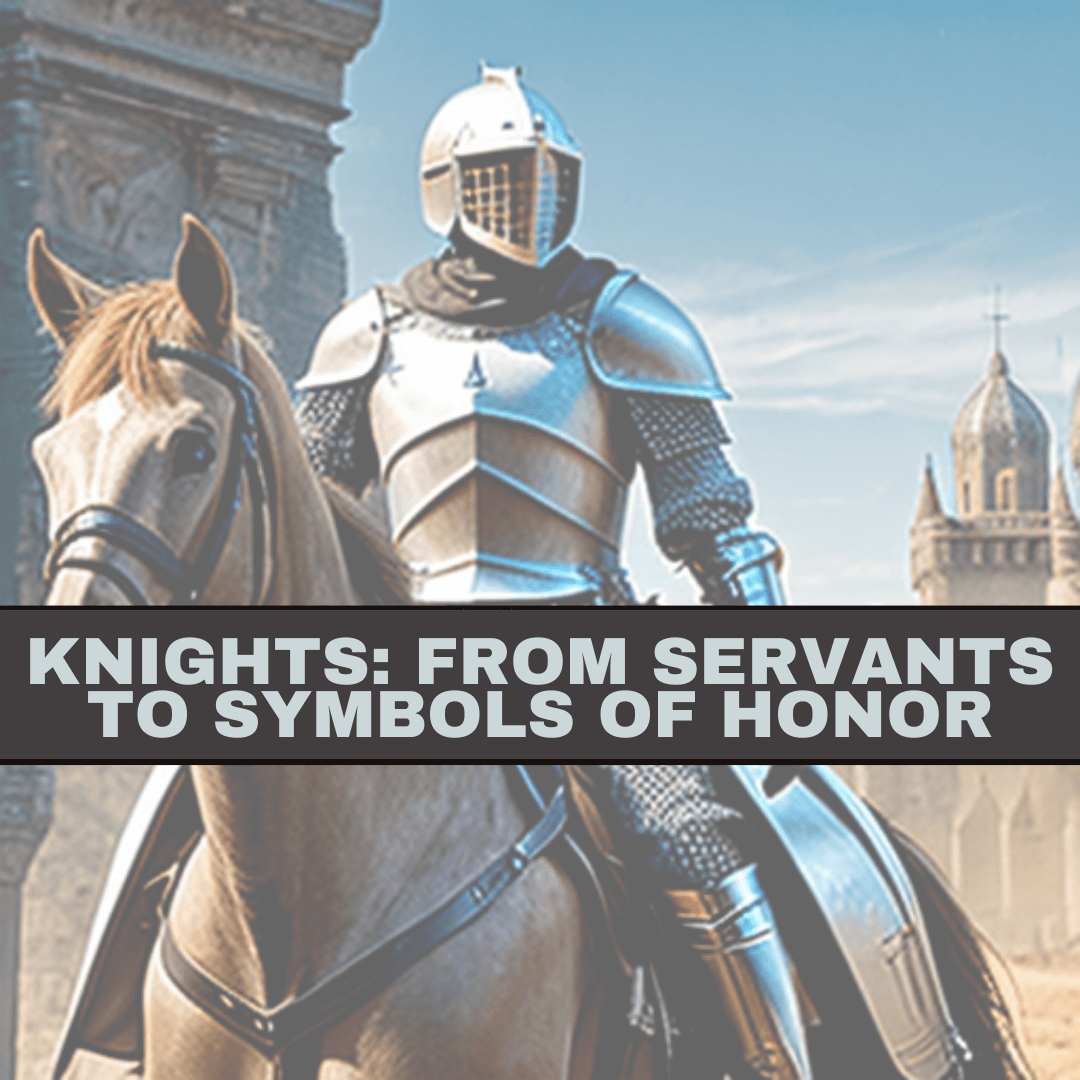
Close your eyes and step back into the era of Old English. Imagine a bustling market, a crowd engaged in lively conversations, their words reverberating through the air. Among these conversations, a term stands out – “cniht”. On first hearing, this term, synonymous with a boy or servant, may seem unassuming.
But it’s the starting point of our exploration into the remarkable journey of the term “knight”.
From “cniht” to “knight”, how did this word metamorphose into the revered title we understand today? How did a term describing servitude eventually come to symbolize honor, bravery, and chivalry? Journey with The Reliable Narrator as we unveil the fascinating evolution of this word and its cultural impact.
Humble Beginnings: “Cniht”
The term “knight” finds its roots in Old English “cniht“, which originally meant a boy or servant. A societal shift during the Middle Ages saw “cniht” gradually transition to denote a young man undergoing training to become a mounted warrior.
Chevalier and the Rise of Chivalry
In the 12th century, English society was deeply influenced by Norman French, altering the linguistic landscape. The term “chevalier“, the French word for a horse-mounted warrior, mirrored the English “knight”. Although “knight” did not directly evolve from “chevalier”, these words are cognates, meaning they have a common etymological origin and evolved separately in their respective languages.
Chivalry, the ideal qualities expected of a knight, such as bravery, loyalty, and courtesy, is derived from “chevalier.” The French “chevalerie” embodied a code of conduct associated with the ideal courtly knight, espousing virtues like honor and gallantry. This chivalric code became intertwined with the identity of the knight, shaping the romanticized image of knights as not just warriors, but paragons of virtue and honor.
Knights: The Shield of the Kingdom
Knighthood and its importance, as we understand it today, rose in tandem with the feudal system. In these feudal societies, the monarch granted lands, known as fiefs, to his most loyal subjects – the knights. In exchange, these knights pledged military service to their monarch or lord. This formed the basis of the feudal society that dominated much of medieval Europe.
But why did the institution of knighthood become so significant? The answer lies in the role of the knights within this system. Knights became a pillar of medieval society, primarily due to their military importance. They formed the backbone of their lord’s military strength, providing security and protection to the realm.
Moreover, knights were often of noble birth and were key political actors in medieval society. Knighthood was a pathway to prestige and social mobility, adding to its allure. This tradition, where a king or lord knighted a warrior, not only recognized the recipient’s martial skills but also validated his social status.

From Medieval Times to Modern Honor
While the practical role of knights as warriors waned with the 16th century, the cultural and symbolic significance of the term persisted. Revived in the 19th century, modern knighthood is a distinction awarded by the British monarch to individuals who have significantly contributed to their nation.
Beyond Chivalry: Popular Phrases
Today, the term “knight” resonates beyond its chivalric context. The phrase “knight in shining armor” evokes the image of a chivalrous hero, while a “knight-errant” denotes a noble warrior seeking adventures. These expressions, stemming from the knight’s historical ethos, continue to influence contemporary language and narratives.
Reliable Thoughts
Exploring the evolution of the term “knight” deepens our appreciation of language and its dynamic transformation. This word, which originated as a term for a servant and evolved into a title of nobility and honor, not only signifies societal progression and adaptation but also enriches our cultural narratives.
Looking to delve deeper into the world of vocabulary? Or perhaps you’ve come across intriguing examples of the usage of the term “knight” in literature or contemporary culture?
Drop a comment below and uncover more engaging content with The Reliable Narrator. Together, let’s continue this linguistic journey, one word at a time.


Leave a Reply