

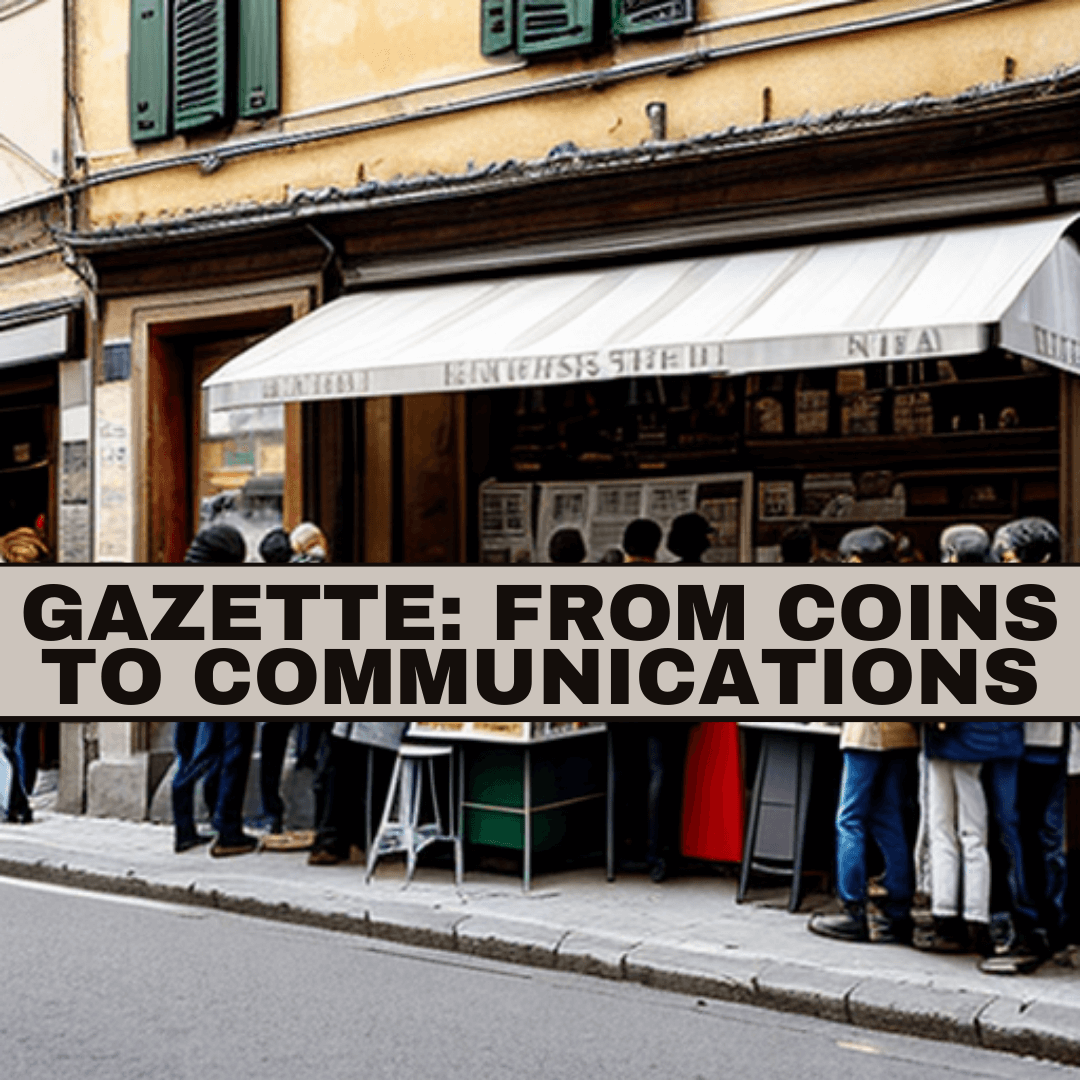
Picture yourself in the heart of 16th-century Venice, Italy, amidst a bustling market. Traders shout to sell their wares, and amidst the cacophony, a single word resonates – “Gazzetta.” This term, synonymous with a small coin, may seem insignificant, but it sets the stage for our exploration into the word gazette.
But what does “gazzetta” really mean? How did it transform into the term we know today – “gazette”? And why does it still hold relevance in our contemporary society? Journey with The Reliable Narrator as we delve into the evolution of gazette, from its humble coin origins to its impact on modern-day communication and beyond.
The Coin That Spoke: Gazette in its Infancy
Delving into the world of words, we begin with the intriguing transformation of gazette from a humble coin to an information powerhouse. The story starts in Italy. The term “gazzetta” originally referred to a small coin, a term that gradually found a new purpose – representing a modestly priced news sheet.
Venice: The Birthplace of the Gazette
The first gazettes took birth in mid-16th century Venice, enticing readers with a blend of gossip, rumors, and updates about ongoing events. These early Italian gazettes effectively broke down the barriers of information distribution, reaching readers from various social strata.
The rapid spread of these gazettes beyond Italy’s borders highlighted their success and the growing need for accessible news among the European masses.
The English Take: Formal and Focused Newspapers
The 17th century witnessed the seamless adoption of gazette into English. The first English gazette, launched in London in 1665, stood apart from its Italian predecessors due to its formal nature.
These gazettes steered away from the gossip and rumor-heavy Italian model, focusing instead on current events. This shift in focus played a key role in shaping the modern newspaper, which prioritizes factual reporting over hearsay.

Modern Gazettes: Official Outlets of Communication
In contemporary language, “gazette” refers to a government publication containing official announcements and legal notices. This transformation over centuries underscores how language evolution often parallels societal changes and needs.
Current-day Newspapers
Even as the term gazette broadened its reach to official government documents and geographical directories, it didn’t abandon its roots in news reporting. In fact, the word gazette is widely used in the names of numerous contemporary newspapers globally, continuing the tradition set centuries ago in Venice.
From the “Montreal Gazette” in Canada to the “Pittsburgh Post-Gazette” in the United States, and the “Government Gazette” in Australia, these modern publications pay homage to the heritage of the term.
Beyond News: The Geographic “Gazetteer”
The versatility of the term gazette extends beyond news and governance. In the realm of geography, we find the “gazetteer“, a directory offering exhaustive details about different places. It could include anything from a place’s name and population to its geographical specifics and significant landmarks.
Reliable Thoughts
Exploring the transformation of the term “gazette” deepens our appreciation of language evolution and the power of words. This modest coin term turned communication medium not only bridges the gap between government and citizens but also reflects our society’s progression and adaptation. Grounded in historical contexts and enduring to this day, the continued relevance of gazette attests to its timeless significance.
Eager to delve deeper into the world of vocabulary? Or perhaps you have come across some intriguing examples of using gazette in your daily life? Or are you interested in discovering more words and their fascinating origins?
Drop a comment below and uncover more such engaging content with The Reliable Narrator. Together, let’s continue this linguistic journey, one word at a time.


Leave a Reply