

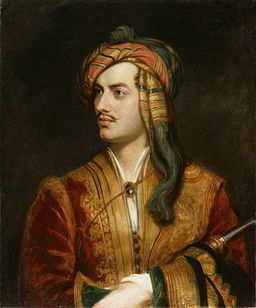
Writing poetry can be a rewarding exercise. From aspiring beginners to seasoned veterans, writers of any experience level can benefit from expressing their ideas through meaningful prose. As a titan of the Romantic movement, Lord Byron poems can help fuel that inspiration.
Lessons of the Romantic Movement and Lord Byron Poems
The Romantic movement was fascinated with the ideas of emotion, individualism, and imagination. It also dropped many of the conventions from the Enlightenment movement that came before it. Romantic poetry idolizes beauty, nature, and the human condition.
Lord Byron was a leading figure of the Romantic movement and is considered among the greats of English Literature. He was a master of his craft, and writers can find knowledge and inspiration in his poetry.
Below are 20 of Lord Byron’s most well-known poems. However, this is just a sampling of the poet’s large body of work. More complete collections of Lord Byron poems are available to dive deeper into his writing.

20 Lord Byron Poems
1. “Childe Harold’s Pilgrimage” (1812-1818)
“There is a pleasure in the pathless woods,
There is a rapture on the lonely shore,
There is society where none intrudes,
By the deep Sea, and music in its roar:
I love not Man the less, but Nature more,
From these our interviews, in which I steal
From all I may be, or have been before,
To mingle with the Universe, and feel
What I can ne’er express, yet cannot all conceal.”
-Except from “Childe Harold’s Pilgrimage”

Lord Byron’s most iconic narrative poem, “Childe Harold’s Pilgrimage,” highlights the major tenants of the Romantic movement. It also showcases the Byronic Hero- a literary archetype introduced by Byron that is still popular today.
What is a Byronic Hero?
A Byronic Hero is a mysterious figure, portrayed as intelligent and charismatic, but also brooding and self-destructive. The character of Childe Harold displays these traits. This persona reflects the personality and characteristics of Lord Byron himself.
2. “Don Juan” (1819-1824)
“Don Jose and the Donna Inez led
For some time an unhappy sort of life,
Wishing each other, not divorced, but dead;
They lived respectably as man and wife,
Their conduct was exceedingly well-bred,
And gave no outward signs of inward strife,
Until at length the smother’d fire broke out,
And put the business past all kind of doubt.”
-Except from “Don Juan”
Lord Byron found inspiration in the works of others for his epic poem “Don Juan.” It is a satire of the legendary Spanish womanizer and heartthrob. However, Byron’s twist on the tale reverses the roles of seducer and seduced.
3. “She Walks in Beauty” (1814)
“She walks in beauty, like the night
Of cloudless climes and starry skies;
And all that’s best of dark and bright
Meet in her aspect and her eyes;
Thus mellowed to that tender light
Which heaven to gaudy day denies.”
-Except from “She Walks in Beauty“
If the title isn’t evident, “She Walks in Beauty” deals heavily with the topic of beauty. As the Industrial Revolution upheaved society and made life grittier, the Romantics sought an escape to a cleaner version of beauty.
4. “When We Two Parted” (1815)
“When we two parted
In silence and tears,
Half broken-hearted
To sever for years,
Pale grew thy cheek and cold,
Colder thy kiss;
Truly that hour foretold
Sorrow to this.”
-Except from “When We Two Parted”
Love. Loss. Heartache. Romantics were determined to break away from the cold, scientific approach of the Enlightenment. Lord Byron poems deal with emotions, imagination, and the human experience.
5. “The Destruction of Sennacherib” (1815)
“Like the leaves of the forest when Summer is green,
That host with their banners at sunset were seen:
Like the leaves of the forest when Autumn hath blown,
That host on the morrow lay withered and strown.”
-Except from “The Destruction of Sennacherib”
Writers should be mindful of the style and technique of other authors. It can help build their own abilities. Byron’s use of literary devices and his ability to paint vivid imagery are feats to be admired, studied, and replicated.
6. “The Giaour” (1813)
“Thus rose fair Leila’s whiter neck:-
Thus armed with beauty would she check
Intrusion’s glance, till folly’s gaze
Shrunk from the charms it meant to praise:
Thus high and graceful as her gait;
Her heart as tender to her mate;
Her mate – stern Hassan, who was he?
Alas! That name was not for thee!”
– Except from “The Giaour”
This narrative poem tells the tale of a hero, madly in love with a woman, who is promised to marry another man. This dramatic tale from another century thrives on the idea of passionate love. Romantic poets could find new ideas among the gems of the past.
7. “The Corsair” (1814)
“O’er the glad waters of the dark blue sea,
Our thoughts as boundless, and our souls as free,
Far as the breeze can bear, the billows foam,
Survey our empire and behold our home!
These are our realms, no limits to their sway—
Our flag the sceptre all who meet obey.
– Except from “The Corsair”
Major elements of Lord Byron’s writing style can be found in his poem “The Corsair.” A Byronic Hero, the pirate captain, is haunted by an unrequited love from his past. He yearns for a woman who unknowingly loves him back.
8. “So We’ll Go No More A-Roving” (1817)
“So, we’ll go no more a roving
So late into the night,
Though the heart be still as loving,
And the moon be still as bright.
For the sword outwears its sheath,
And the soul wears out the breast,
And the heart must pause to breathe,
And love itself have rest.
Though the night was made for loving,
And the day returns too soon,
Yet we’ll go no more a roving
By the light of the moon.”
– So We’ll Go No More A-Roving, Lord Byron
Writers should reflect on the emotions evoked by Lord Byron poems. In “So We’ll Go No More A-Roving,” the poet uses his words to bring those emotions to life. His use of literary devices helps create those feelings in readers.
9. “Darkness” (1816)
“I had a dream, which was not all a dream.
The bright sun was extinguish’d, and the stars
Did wander darkling in the eternal space,
Rayless, and pathless, and the icy earth
Swung blind and blackening in the moonless air;”
– Except from “Darkness”
Lord Byron poems are not all about love. Romantic poets were also interested in supernatural and gothic themes. “Darkness” shows the creepier side of Byron’s prose by painting a nightmarish scene.
10. “Prometheus” (1816)
“Titan! to whose immortal eyes
The sufferings of mortality,
Seen in their sad reality,
Were not as things that gods despise;
What was thy pity’s recompense?
A silent suffering, and intense;
The rock, the vulture, and the chain,
All that the proud can feel of pain,
The agony they do not show,
The suffocating sense of woe,
Which speaks but in its loneliness,
And then is jealous lest the sky
Should have a listener, nor will sigh
Until its voice is echoless.”
– Except from “Prometheus“
Admiration for the ancient world is another element of Romantic poetry that can be seen in some Lord Byrom poems. Greek mythology plays a prominent role in “Prometheus.” They would also serve as inspiration for Mary Shelly’s “Frankenstein: The Modern Prometheus.”
11. “Manfred” (1817)
12. “The Prisoner of Chillon” (1816)
13. “On This Day I Complete My Thirty-Sixth Year” (1824)
14. “Epistle to Augusta” (1816)
15. “The Eve of Waterloo” (1815)
16. “Ode to Napoleon Buonaparte” (1814)
17. “Hebrew Melodies” (1815)
18. “The Dream” (1816)
19. “To Thomas Moore” (1816)
20. “The Vision of Judgment” (1822)
Lord Byron Biography
George Gordon Byron was an English poet considered one of the leading figures of the Romantic movement. Born in London on January 22, 1788, Lord Byron inherited his title and estates from his great-uncle at the age of ten.
Byron attended Cambridge University but did not graduate. He traveled extensively throughout Europe, including in Portugal, Spain, Greece, and Italy. These experiences influenced Lord Byron poems and writing.
He was known for his poetry and also his scandalous personal life, including numerous love affairs and debts. He died in 1824 while fighting as a volunteer in the Greek War of Independence.
How did Lord Byron die?
Lord Byron died on April 19, 1824, in Missolonghi, Greece, in the Greek War of Independence. He was 36.
Byron contracted a fever a few days before his death. Medical procedures at the time, such as bleedings, likely worsened his condition. His fever grew, and he died in a makeshift hospital in the war-torn city.
It is reported his dying words were: “Come, come, no weakness. Let’s be a man to the last. Shall I sue for mercy? Now I must sleep.”
Despite his iconic status among the Greeks and their struggle against the Ottoman Empire, Byron’s body was returned to England. However, it is rumored that his heart was buried in Missolonghi.
Lord Byron was denied burial in Westminster Abbey due to his ‘questionable morality.’ He was laid to rest in the family vault at Hucknall Torkard. Thousands of mourners turned out to pay their respects during the funeral procession.
A memorial to Lord Byron was eventually placed in Westminster Abbey in 1969.
Find inspiration in these Lord Byron poems and bring your next great idea onto the page.


Leave a Reply