

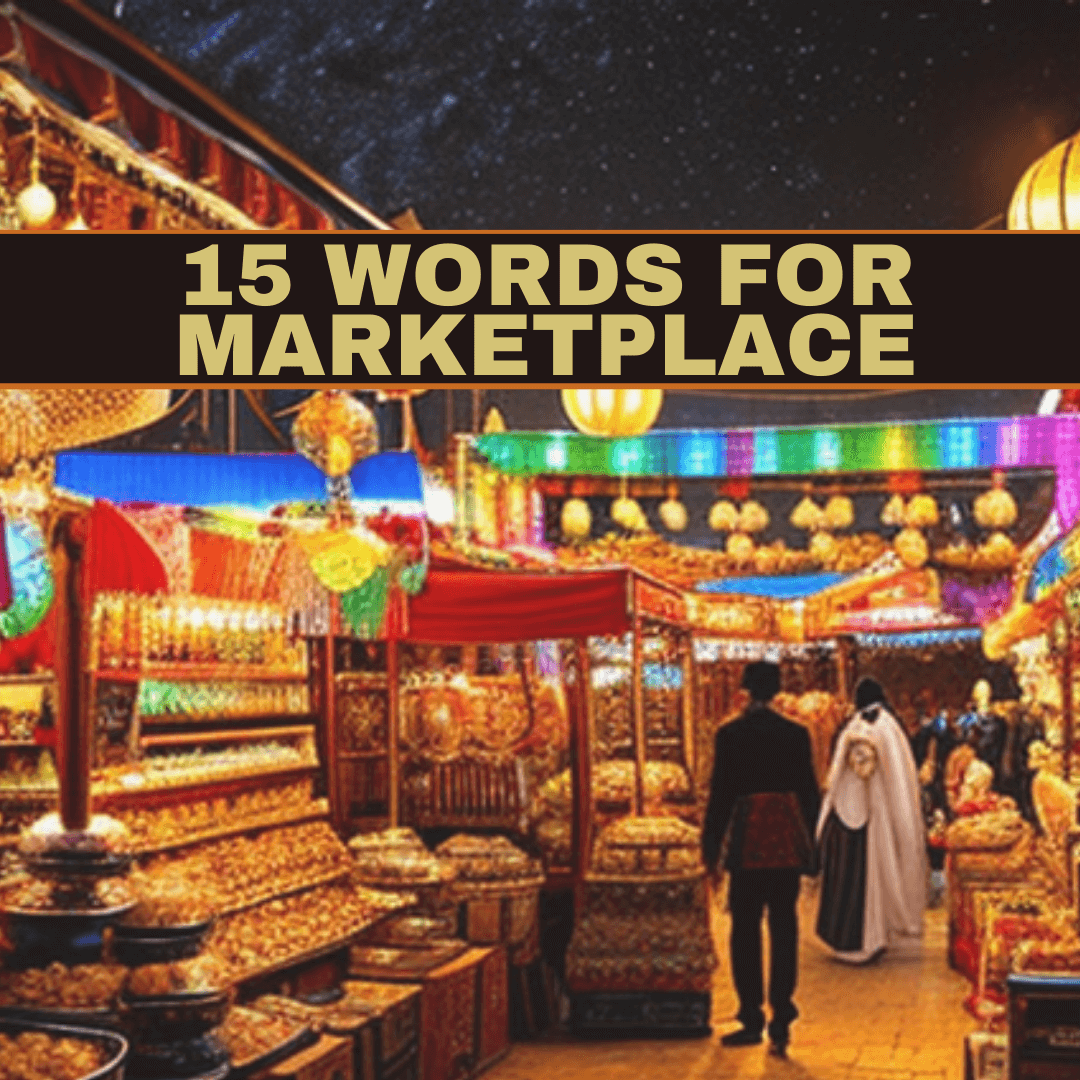
In the world of storytelling, adding flavor to your writing is key to engage readers. One way to achieve this is by offering readers a tour of words. A “marketplace”, for instance, is a common setting for many stories. But did you know that various cultures have their own distinct names for it? Explore these 15 vivid words for “marketplace” and add depth to your writing with The Reliable Narrator.
15 Words for Marketplace
Join us on a linguistic journey, as we explore 15 global words for “marketplace”. These words not only enhance your storytelling, but also provide a glimpse into world cultures. So, are you ready to journey through a Persian Bazaar, Spanish Mercado, or a Polish Rynek? Let’s begin!
Marketplace
This universally understood term is used in English to refer to any place where goods are bought and sold. Marketplaces can be physical, like open-air markets or shopping malls, or virtual, like online marketplaces.
Bazaar
Originating from the Persian word “bazar“, a bazaar signifies an open-air marketplace brimming with a range of goods—be it food, clothing, or souvenirs. Bazaars are a vibrant hub of activity and commerce often associated with Middle Eastern and South Asian cultures.
Souk
Much like a bazaar, a souk is a marketplace that offers a wide array of goods. This term hails from the Arabic word “sūq” and is more commonly associated with North African and Middle Eastern countries.
Flea Market
A flea market, with its origins in the Old French word “flère” meaning “flea”, is an outdoor marketplace that primarily sells secondhand goods. From vintage clothes and antique furniture to old appliances, these markets are treasure troves for bargain hunters and collectors.
Ting
With roots in the Old Norse word “teng” meaning “to join”, Tings were the vibrant heart of Scandinavian communities during the Middle Ages. Not only were goods bought and sold here, but these open-air markets also served as important gathering spots for discussions and decision-making.
Foire
Derived from the Old French word “foiere” meaning “fair”, Foires were large marketplaces in medieval Europe. Beyond commerce, Foires provided a canvas for entertainment, with jesters, acrobats, and myriad spectacles captivating the crowds.
Rynek
The Polish word “rynek” translates to “market”. Rynki are typically central squares of Polish towns and cities, bustling with shops and restaurants and offering a captivating glimpse of Polish culture and lifestyle.
Mercado
Stemming from the Spanish word “mercado”, these marketplaces are a common sight in Spanish-speaking countries. From locally sourced produce to artisanal souvenirs, Mercados are a must-visit to get a taste of the vibrant local culture.
Agora
Rooted in ancient Greece, the Agora was both a marketplace and a place of assembly, a crucial element of every city-state where citizens gathered for political, philosophical, and commercial exchanges.
Pasar
This word comes from Indonesian and Malaysian languages, signifying a marketplace. Pasars can be found in various forms, from open-air markets to large supermarket chains, offering a diverse array of local food and goods.
Tianguis
Originating from the Nahuatl language spoken by the Aztecs, Tianguis refers to traditional open-air markets in Mexico. From fresh produce to local crafts, these markets are an integral part of the Mexican cultural fabric.
Piazza
In Italian cities, a Piazza often serves as the marketplace. These grand public squares are typically surrounded by buildings, offering a central hub for commerce, socialization, and sometimes even religious and political functions.
Torget
Borrowed from the Scandinavian languages, Torget literally means “the square”. Often, Torg (the singular form) is a city’s commercial heart, bustling with stalls offering everything from local produce to handmade crafts.
Shūkì
A term used in East Asia, particularly China, a Shūkì (or simply Shuk in a more casual context) is a marketplace, often seen bustling with vendors selling a variety of goods, from fresh vegetables to household items.
Yarmarka
This word comes from the Russian language, signifying a fair or market. Yarmarkas were traditionally held once a year in Russian towns and featured a wide variety of goods, from food products to handcrafted items. They were also important social events, often featuring entertainment such as music and dance performances.

Reliable Thoughts
The journey into the evolution of the word “marketplace” deepens our understanding of language and culture. As we travel from the bustling Bazaars of Persia to the vibrant Tianguis of Mexico, or from the philosophical Agoras of ancient Greece to the central Piazzas of Italy, we are privy to diversity in these marketplaces.
These linguistic explorations root us in history while shedding light on our shared human experiences of trade and community – underpinning the enduring relevance of marketplaces across cultures and times.
Eager to dive deeper into the labyrinth of language? Perhaps you’ve discovered intriguing instances of marketplace terminologies in diverse cultural contexts? Or are you inspired to learn more about the captivating origins and transformations of other words?
Leave a comment below and uncover more such engrossing content with The Reliable Narrator. Together, let’s continue this linguistic journey, one vibrant word at a time.


Leave a Reply